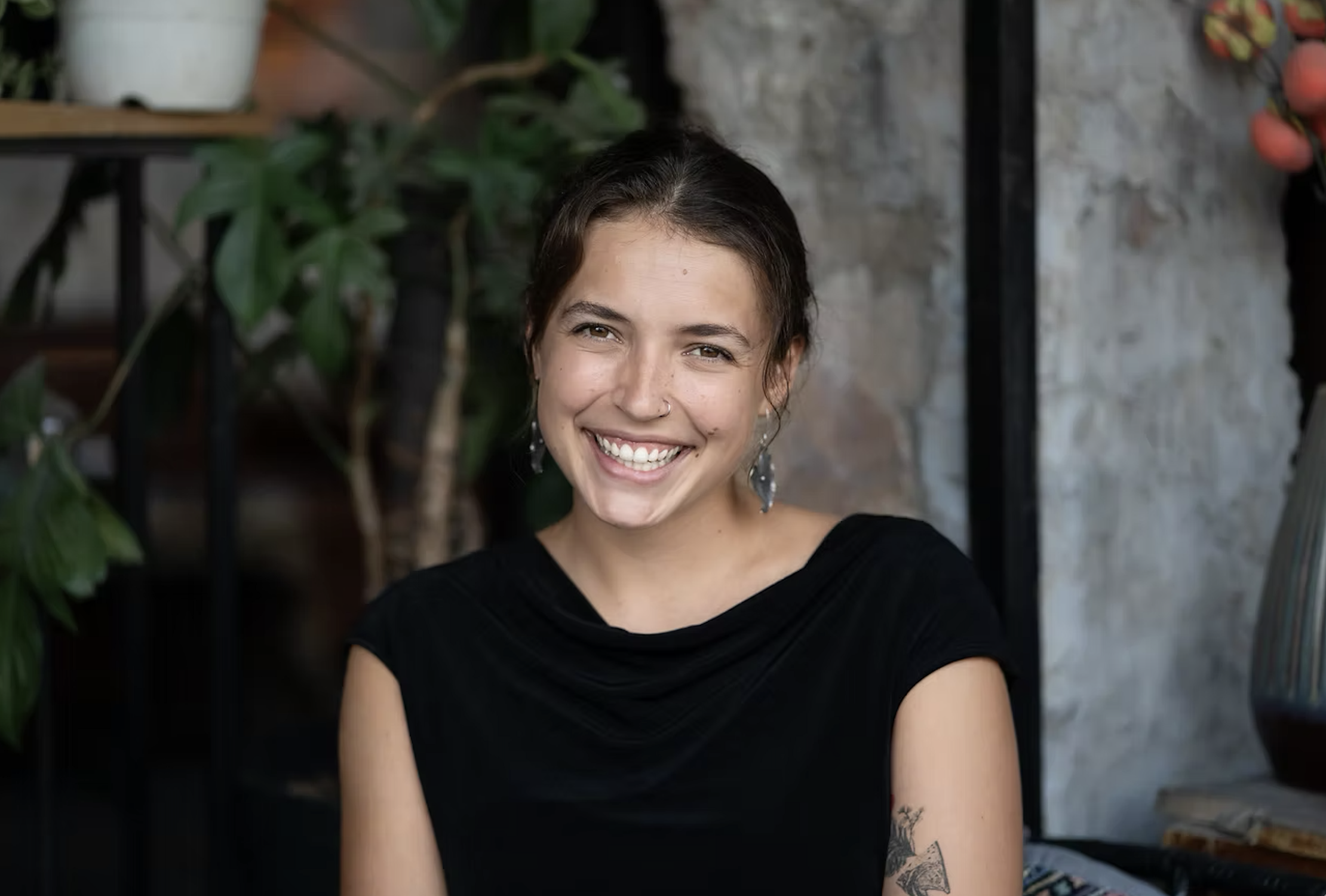
The colorful music video for the song “Ghazali”—newly released by Palestinian-Chilean artist Elyanna—features artwork that might be familiar to lovers of contemporary Uzbek art. Elyanna, who has risen to fame for her unique sound that melds Arabic music with lively Latin rhythms, filmed the entirety of the video in the studio of renowned Uzbek painter Maxim Vardanyan, alongside other local artists, dancers, and crew members. The result is a union of cultures and artistic mediums that is as beautiful as the song is catchy.
24-year-old Elyanna (full name Elian Amer Marjieh) got her start doing covers on social media before relocating to California to pursue music full time. While she’s been signed with Universal Arabic Music since 2021, she gained most of her notoriety in the last handful of years. In 2023, Elyanna was the first Palestinian artist to perform at Coachella, not to mention the first artist to perform an entirely Arabic-language set at the festival. In 2024, she took the stage at Glastonbury alongside Coldplay.
Aside from “Ghazali,” Elyanna’s most popular songs include “WE PRAY” and “Ma Meilleure Ennemie,” both of which she recorded with Coldplay, as well as “Sokkar” and “Ganeni.” This year, she collaborated with Canadian singer-songwriter Jessie Reyez on “Illuminate,” which many will recognize from the FIFA World Cup soundtrack. Reyez and Elyanna performed the song at the opening ceremony in Toronto.
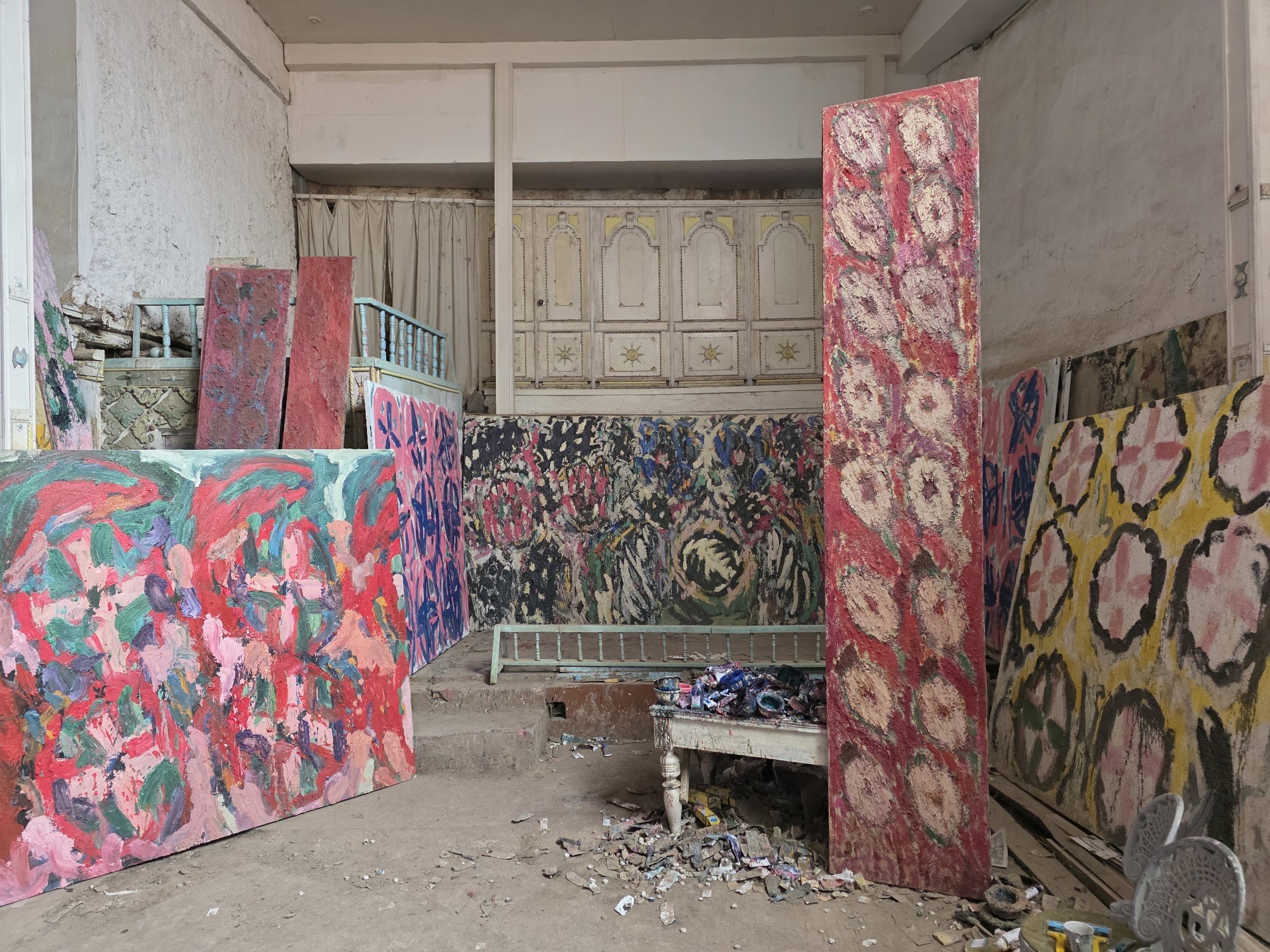
Maxim and Daima Vardanyan’s painting studio in Tashkent, Uzbekistan. Photo courtest of Maxim Vardanyan
It was at that very World Cup that Elyanna first crossed paths with Vardanyan. Elyanna frequently works with her brother Feras Marjieh, known by the stage name Fairdose, on creative direction, and both siblings were already familiar with Vardanyan’s work. Shortly after Toronto, they reached out to Vardanyan on Instagram, expressing their interest in the painter’s work and inquiring as to whether he would like to collaborate on an upcoming video.
After a bit of back and forth about where the collaboration should take place, Vardanyan and his wife Daima convinced Elyanna and Fairdose to make the journey to Uzbekistan to film in their studio in Tashkent. The studio was already full of Vardanyan’s artistic pieces, alongside production and video equipment.
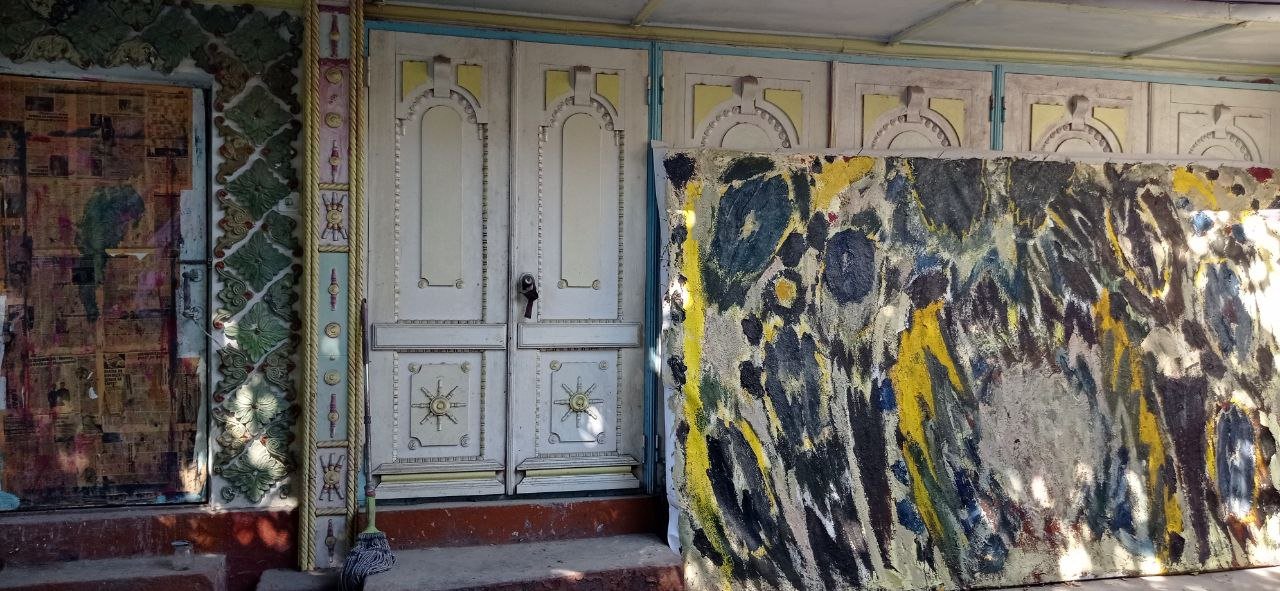
Maxim and Daima Vardanyan’s painting studio in Tashkent, Uzbekistan. Photo courtest of Maxim Vardanyan
According to GQ Middle East, “Ghazali”—which translates to “Gazelle” in English—is inspired by traditional wedding chants, and, indeed, behind the main lyrics, listeners can hear the sounds of voices. According to Elyanna, these are the artist’s own family and friends. In Elyanna’s version of the wedding song, however, the gazelle is not a bride but rather a woman who chooses to be happy on her own terms. The track compares women to gazelles in the sense that they share a certain wild beauty and grace. But she also emphasizes the freedom of the animal and, in turn, the freedom Elyanna wishes for fellow women. Near the end of the song, an English translation of the lyrics reads, “There is no knight, only dreams.”
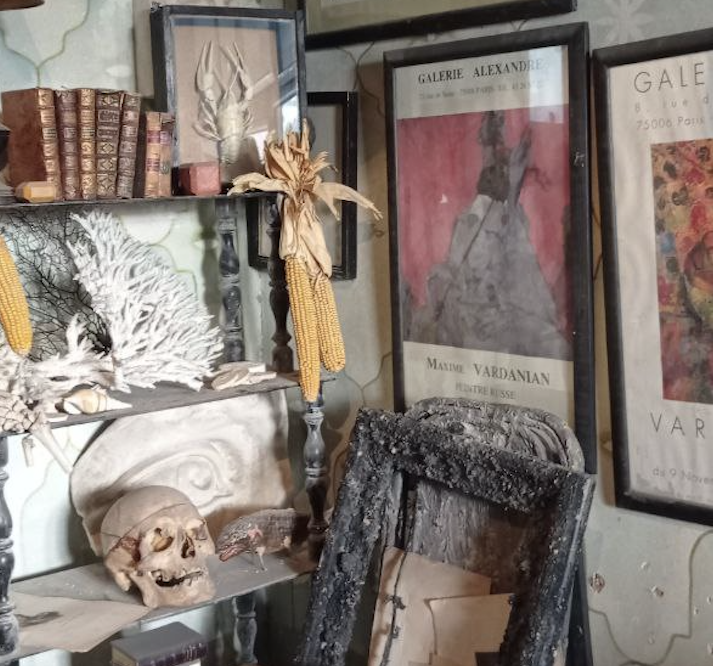
Maxim and Daima Vardanyan’s painting studio in Tashkent, Uzbekistan. Photo courtest of Maxim Vardanyan
The video mirrors this sentiment in bright colors, spirited dancing, and dramatic imagery. At one point, Elyanna herself is dressed in antlers, squaring up against dancers carrying bows and arrows. The narrative begins with somewhat peaceful imagery before unraveling into a darker, more raw portrayal of the heroine by the end. Vardanyan’s work provides a perfect environment for this tale. His style, which features vibrant colors on massive canvasses, fills the screen, while motifs from his paintings appear on many of the dancers’ costumes. In this way, the paintings are not just an element of the video, but the entire home, setting the mood throughout the story and allowing viewers to take in the song’s message within an otherworldly landscape.
Vardanyan himself has long made an impression on art lovers for evoking feelings of freedom. Due to the scale of his paintings, viewers are required to move around in front of them, gaining new perspecive with each new vantage point.
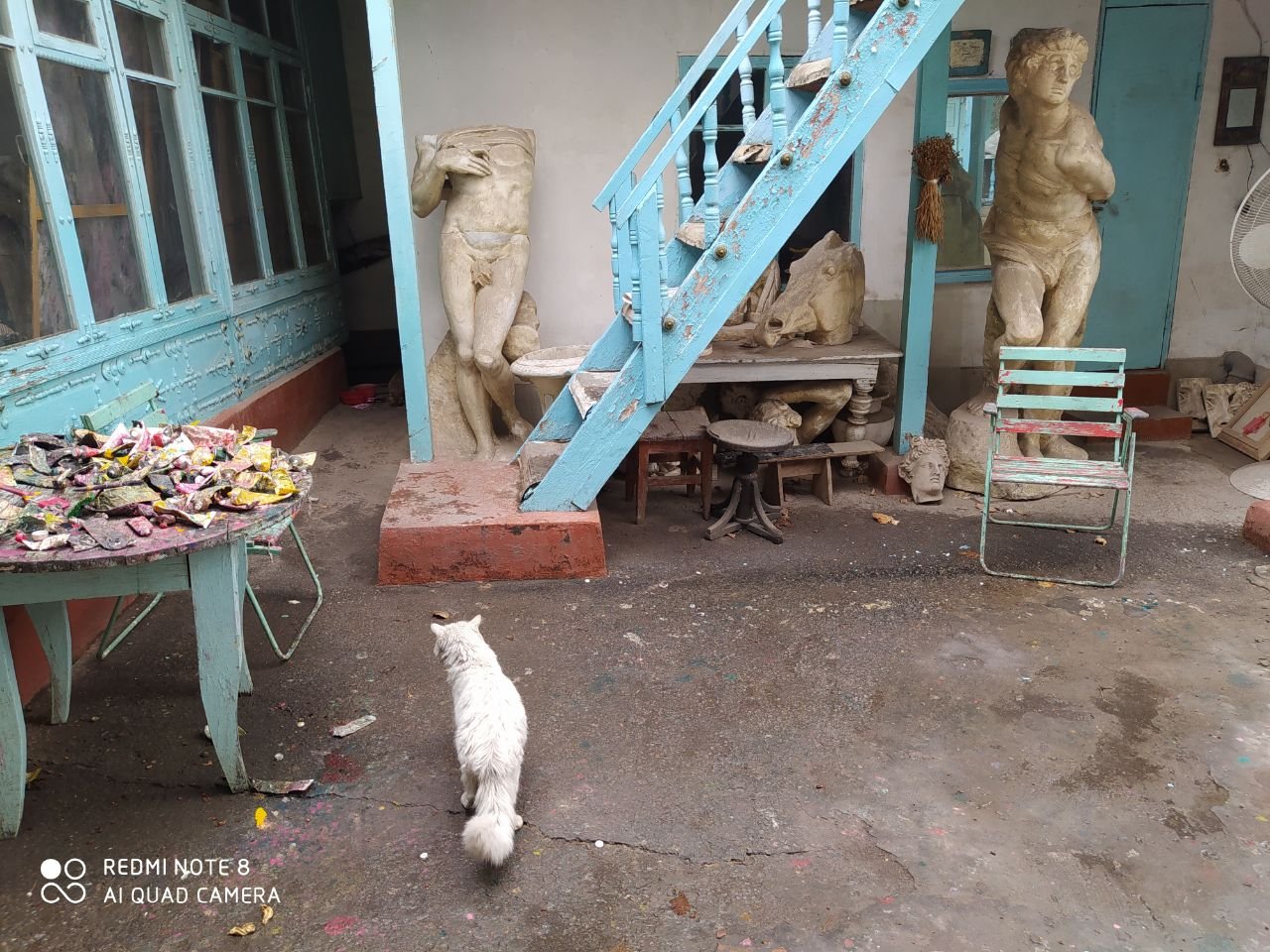
Maxim and Daima Vardanyan’s painting studio in Tashkent, Uzbekistan. Photo courtest of Maxim Vardanyan