Lazgi is called a divine melody. When divine music is played, the human body wants to move and dance on
its own. There is divine soulfulness in lazgi, there is love, joy, enthusiasm and courage in lazgi.
The second name of lazgi means life.
Photos by Mukhiddin A Lee
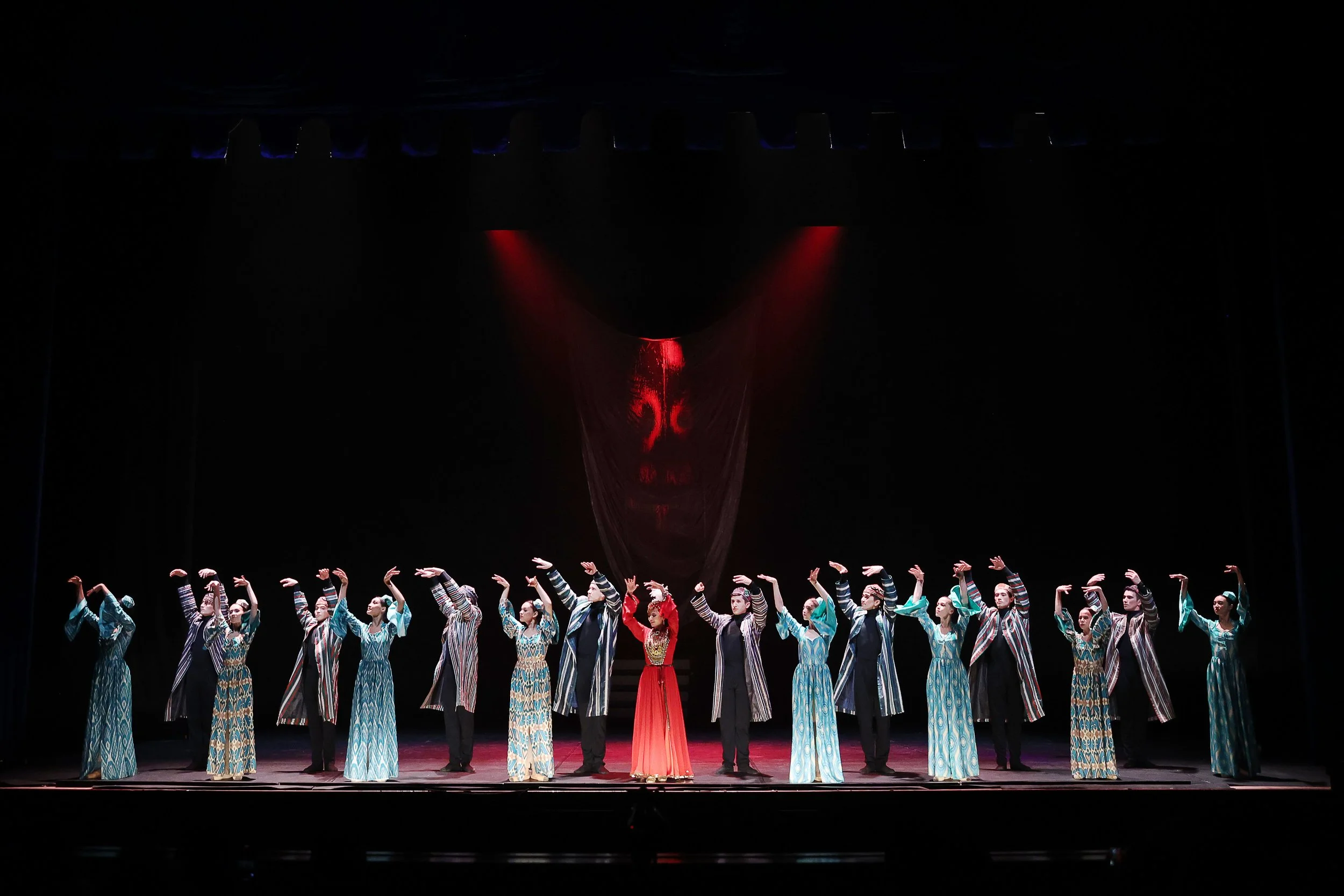
The Living Heritage of Lazgi
Developed over millennia in the histroric region of Khorezm, lazgi ( also spelled as lyazgi) is a fiery, joyous traditional dance celebrated across Uzbekistan. In December 2019, UNESCO officially inscribed lazgi on its Representative List of the Intangible Cultural Heritage of Humanity, noting that its movements capture human creativity by mirroring the sounds of nature alongside feelings of love and happiness.
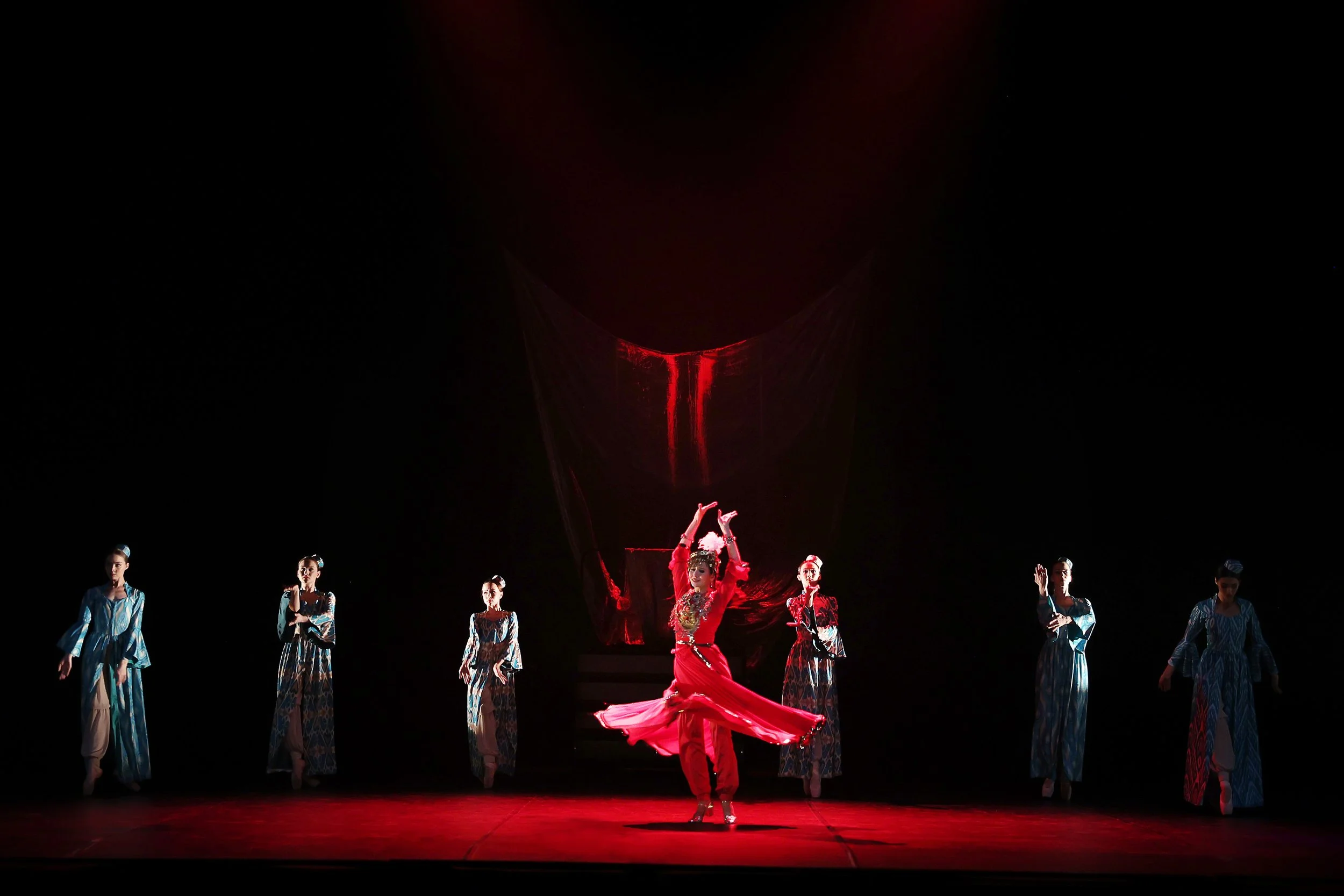
Ancient Roots and Zoroastrian Rituals
The origins of lazgi reach back thousands of years into Central Asian myth and legend, telling stories of life, love, and the creation of the universe.
Historical Accounts: The ancient Greek historian Herodotus documented the melodies and religious rites of the local Saka (Sak-Massaget) tribes in Khorezm, who used these rituals to celebrate the sunrise.
Sacred Fire and Sun Worship: Prior to the arrival of Islam, the people of Central Asia largely practiced Zoroastrianism, a faith that held earth, water, air, and fire as pure, sacred elements. During this era, lazgi was performed in temples and around bonfires to greet the morning sun.
Cultural Resilience: Over the centuries, Khorezm experienced waves of conquest by the Persians, Greeks, Arabs, Mongols, and Russians. Even as Zoroastrianism faded after the spread of Islam, lazgi remained so deeply woven into Khorezmian identity that its ancient sun-welcoming rituals endured through every era.
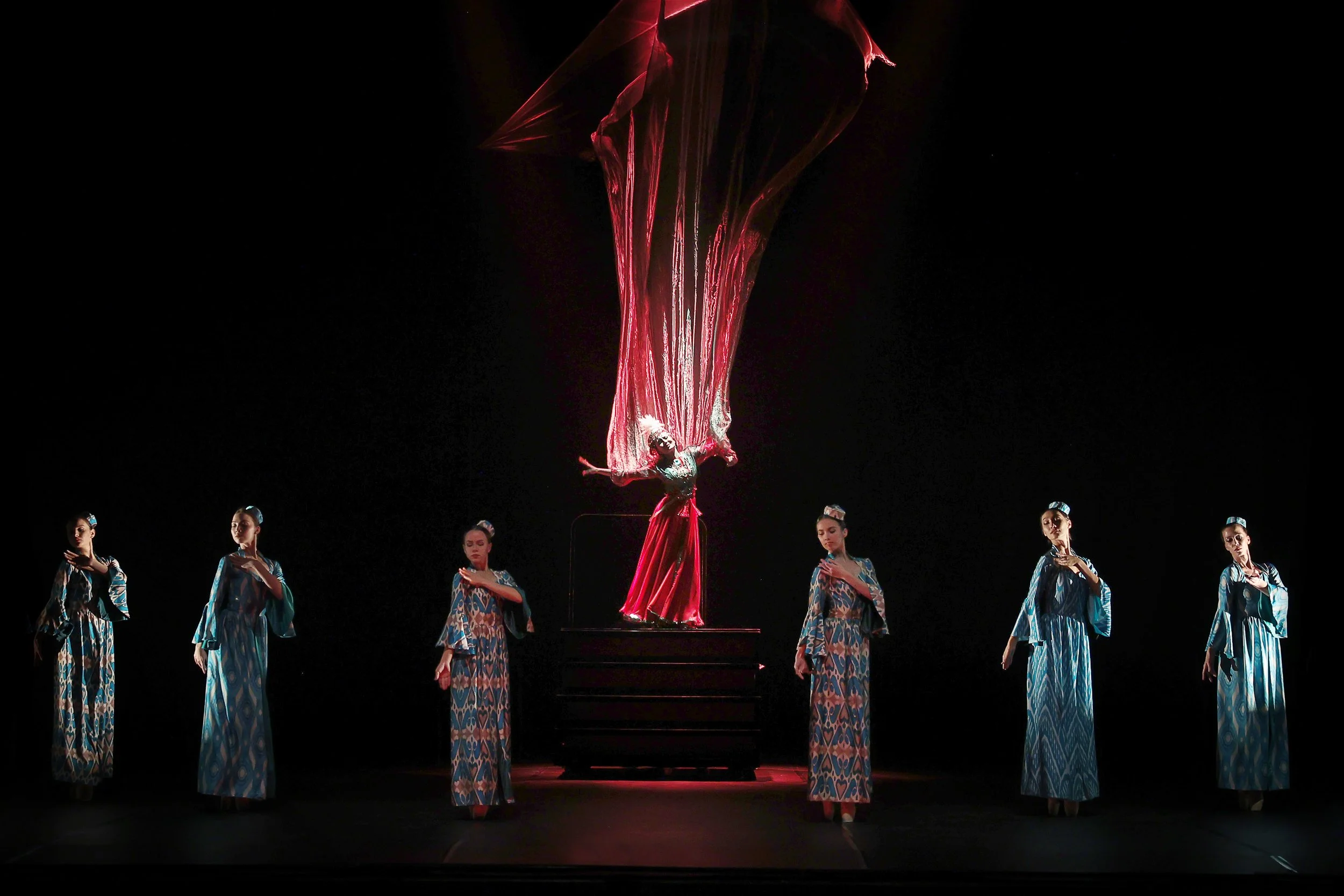
The Musical Journey from Dawn to Dusk
A traditional lazgi performance mirrors the daily cycle of the sun and the awakening of the natural world:
Sunrise: The music opens with a slow, peaceful melody, evoking the first warm rays of light cresting the horizon.
Awakening Nature: As the tempo builds, the music portrays Mother Nature rejoicing in the sun's warmth-symbolizing blooming flowers, buzzing bees and butterflies, chirping birds, and rainbows shimmering in fountains.
Sunset: As the performance concludes, the energy subsides, reflecting the sun dipping below the horizon as the world settles into night.
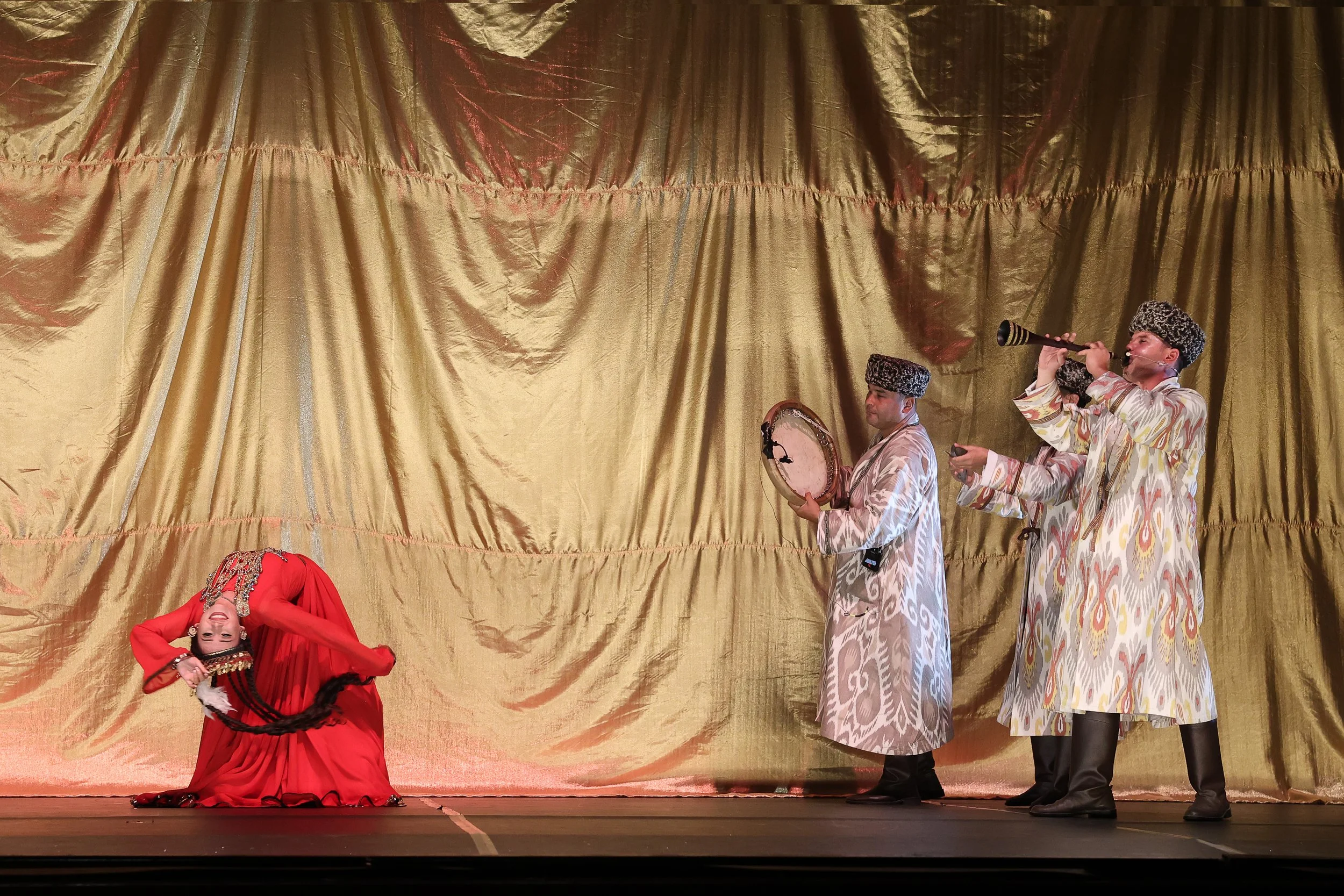
The Anatomy of the Dance
The word lazgi translates to "shiver" or "tremble," a direct reference to the dance's signature sharp shakes, snaps, and energetic jumps. Dancers frequently play kairok (stone castanets) to add crisp, rhythmic clicks to the music.
Physically, the choreography reenacts a human body coming to life as the morning sun warms it:
Dancers begin by raising their hands toward the sky to greet the daylight.
Movement ripples through the body in a deliberate sequence-starting with the fingers, then moving into the palms, wrists, shoulders, and chest.
As the twisting, undulating, and shaking intensify, a radiant smile breaks across the dancer's face, culminating in an explosion of pure joy.
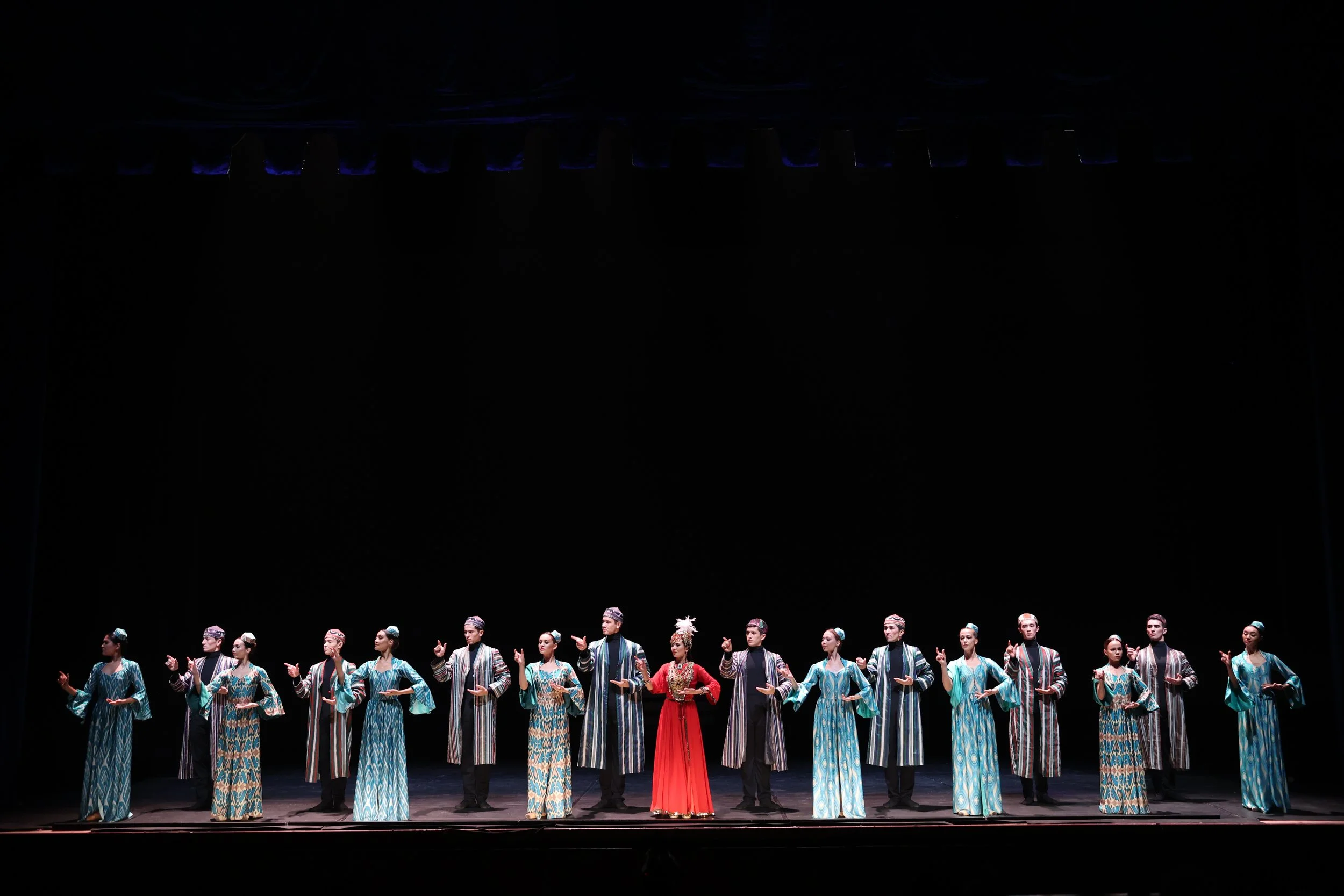
An Enduring Symbol of Khorezmian Life
Today, lazgi stands as far more than a folk performance, its survival across thousands of years testifies to its cultural power. Through its bright rhythms and expressive movements, lazgi continues to embody the resilience, warmth, and living spirit of Khorezm.
The Lazgi performance was taken place in The State Academic Bolshoi Theatre named after Alisher Navoi (GABT). It is located in Tashkent at Zarafshan Street,28 (the auditorium has a capacity of 1,440 seats; the building was designed by A. V. Shchusev in the Stalinist Empire style). You can find more information about this performance here: https://www.gazeta.uz/ru/2025/03/27/ballet-lazgi/