Ceramic Royalty
The Rakhimov dynasty is a master of traditional ceramics. The family is reviving and promoting the ancient traditions of Uzbek ceramics across the country and the world. Our team spoke to the family in the creative atmosphere of their gallery.
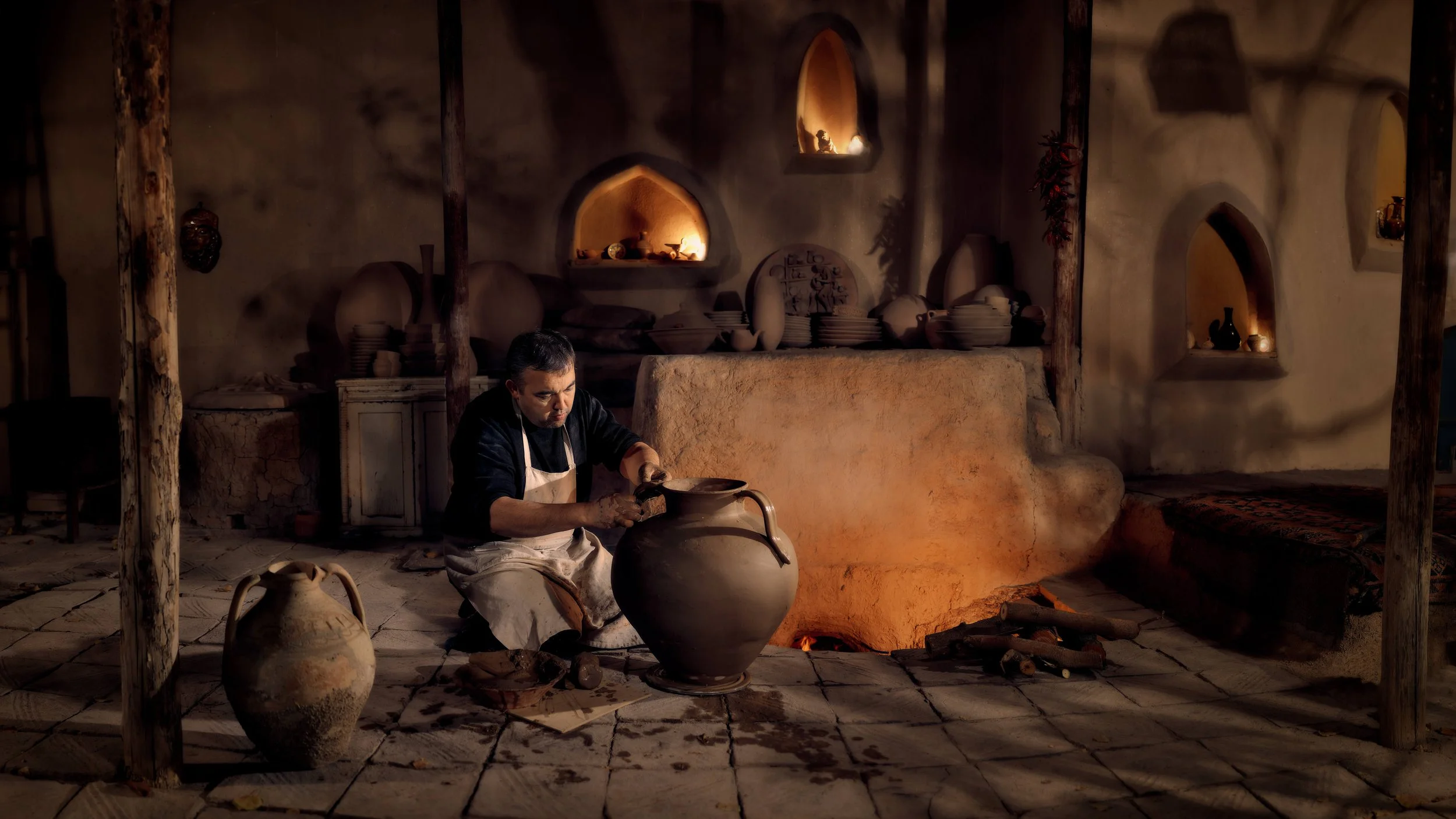
The artisans of this workshop are mostly members of the Rakhimov family, who for several generations have carefully preserved the old ceramics methods and passed them down.
“Seven generations of our family have been engaged in ceramics. My father, great-grandfather and great-great-grandfather were ceramists. My son Alisher and grandson Shokhrukh followed in my footsteps, and their works have been presented at most of my exhibitions. My father Mukhitdin was a ceramist of the fourth generation of the Rakhimov dynasty, who was educated in Moscow and Leningrad back in the 1920s and lived a very interesting life,” says Akbar Rakhimov, now the oldest member of the dynasty.
Growing up in an artistic environment, Akbar’s interest in pottery came easily. He began to master the secrets of pottery in his father’s workshop. It was a dream to fall into such a difficult but interesting profession and be part of a dynasty that he also passed along to his own children. The products created by his son, Alisher, were successfully exhibited at numerous exhibitions in France, Germany and Japan. After the death of Shakhrisabz potter Ahad Muzafarov, Shakhrisabz’s pottery stopped and the master's methods were lost. Over five years of practical experimentation, Akbar was able to restore Shakhrisabz’s methodology and passed on the skills to the potter’s grandchildren.
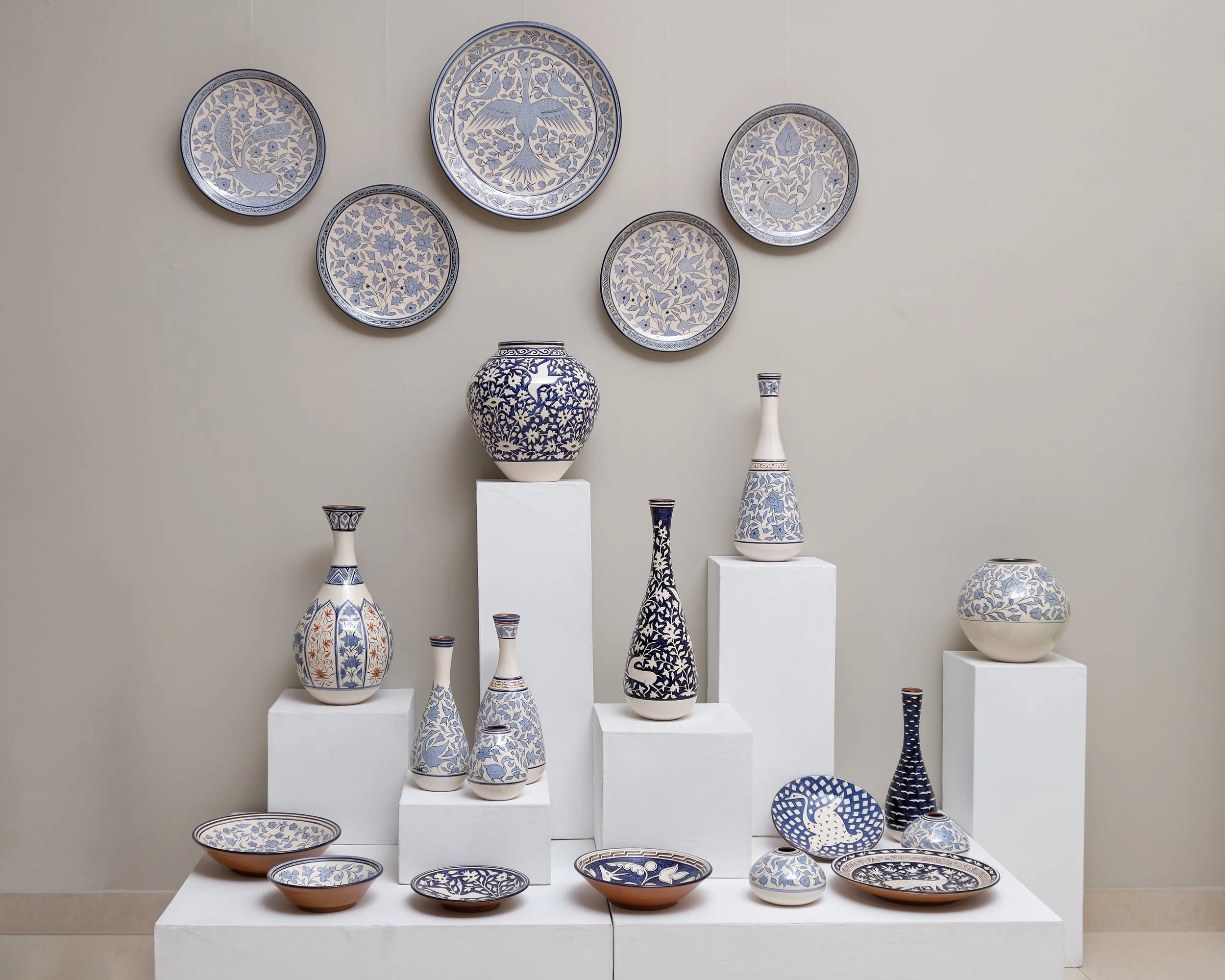
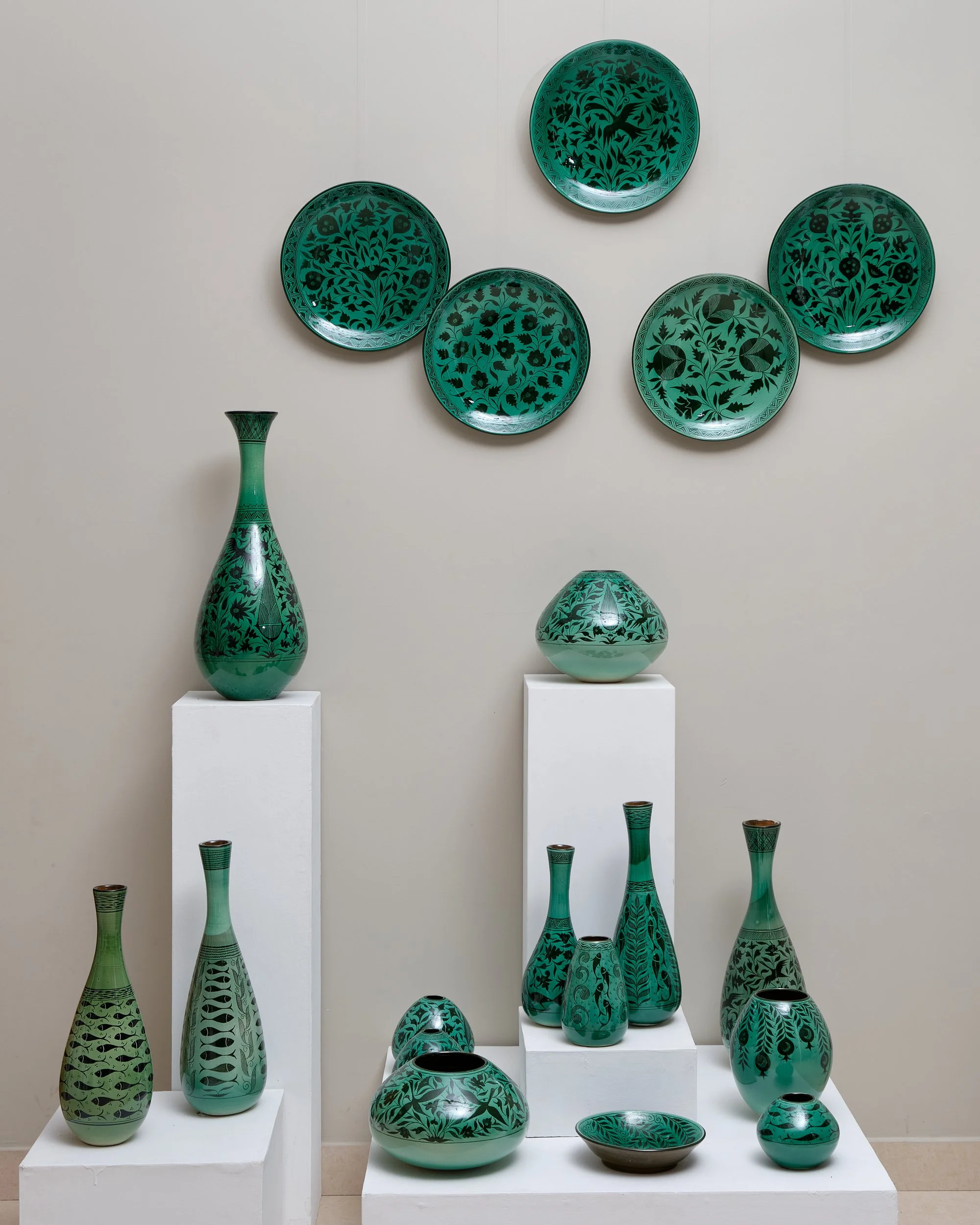
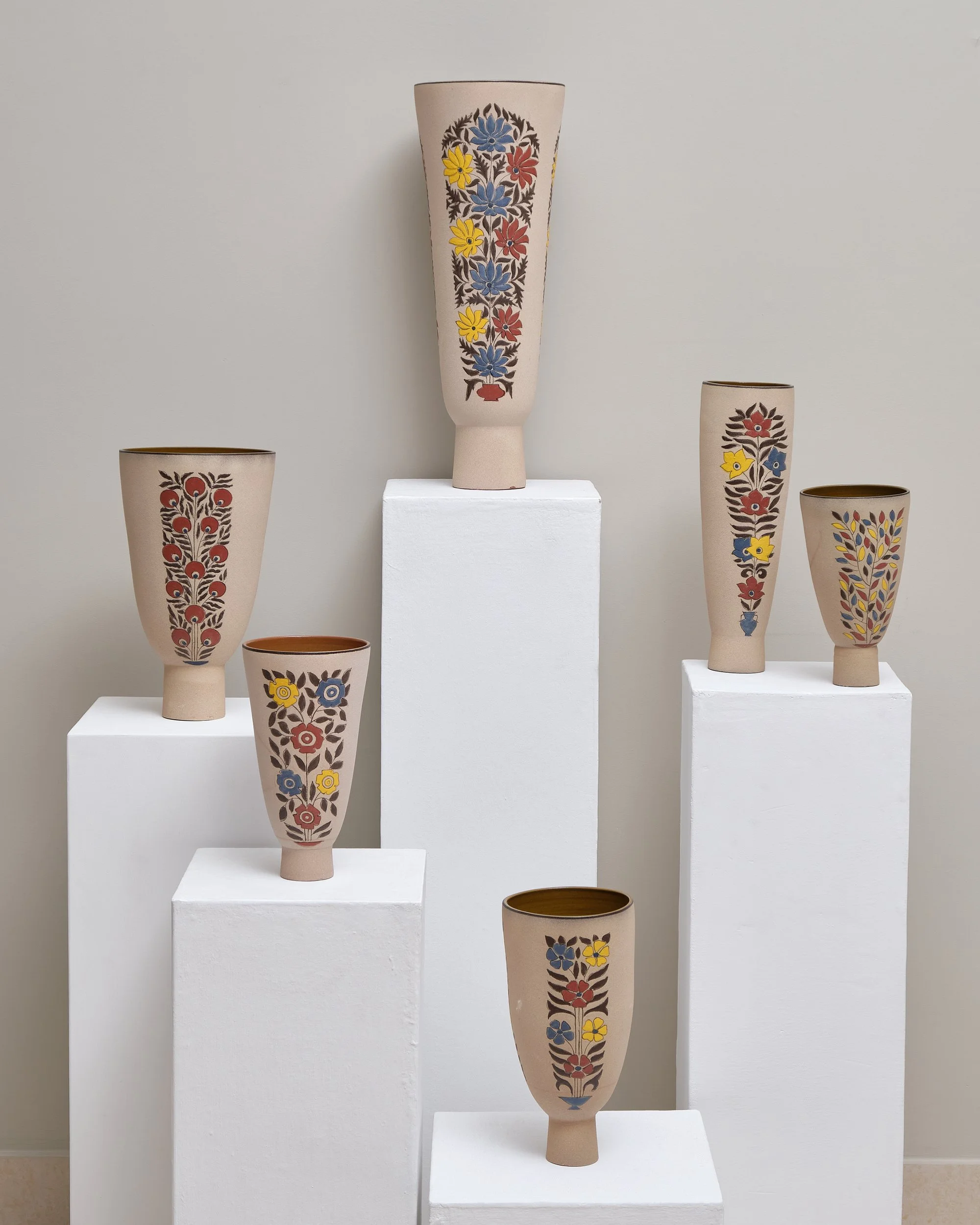
Relying on the experience of his father and grandfather, Akbar worked for several years to create a kind of historical chronicle of Uzbek pottery art. He creates a series of glazed ceramics from the Kushan Empire (1st–3rd centuries); the renaissance of the Samanid epoch (9th–10 centuries); the famed Timurid cobalt, white and blue ceramics; and restoring antique forms of Afrosiab with clear graphic ornament and Arabic inscriptions. He also recreated pieces with ‘needlepoint’ ornamentation, typical of 2nd-century masters, as well as the carved ceramics that dominated in the 5th century, and the glazed green-and-yellow wares that were common in Tashkent in the 11th century.
Birds are the most common imagery in the Rakhimovs’ works: the mythological sirin (the head of a beautiful woman and the body of a bird) and semurgi, haughty peacocks and hoopoes, humble storks, swallows and nightingales all feature. The various shapes, ornaments, patterns and colours they use to adorn the pieces speak of the eternal envy of humans, who have always dreamed of flying – rising to the sun, communicating with the gods and seeing the world from on high.
Alisher Rakhimov continues the traditions of the dynasty, studying archaeology and history and creating ceramic pieces accordingly. He revived the forgotten ‘kashgari’ style that was popular in Tashkent four centuries ago. He also created several collections, including “Sunny Uzbekistan”, “Black Ceramics”, “Black Stone and Rain”, and “Heaven and Earth of Bukhara”.
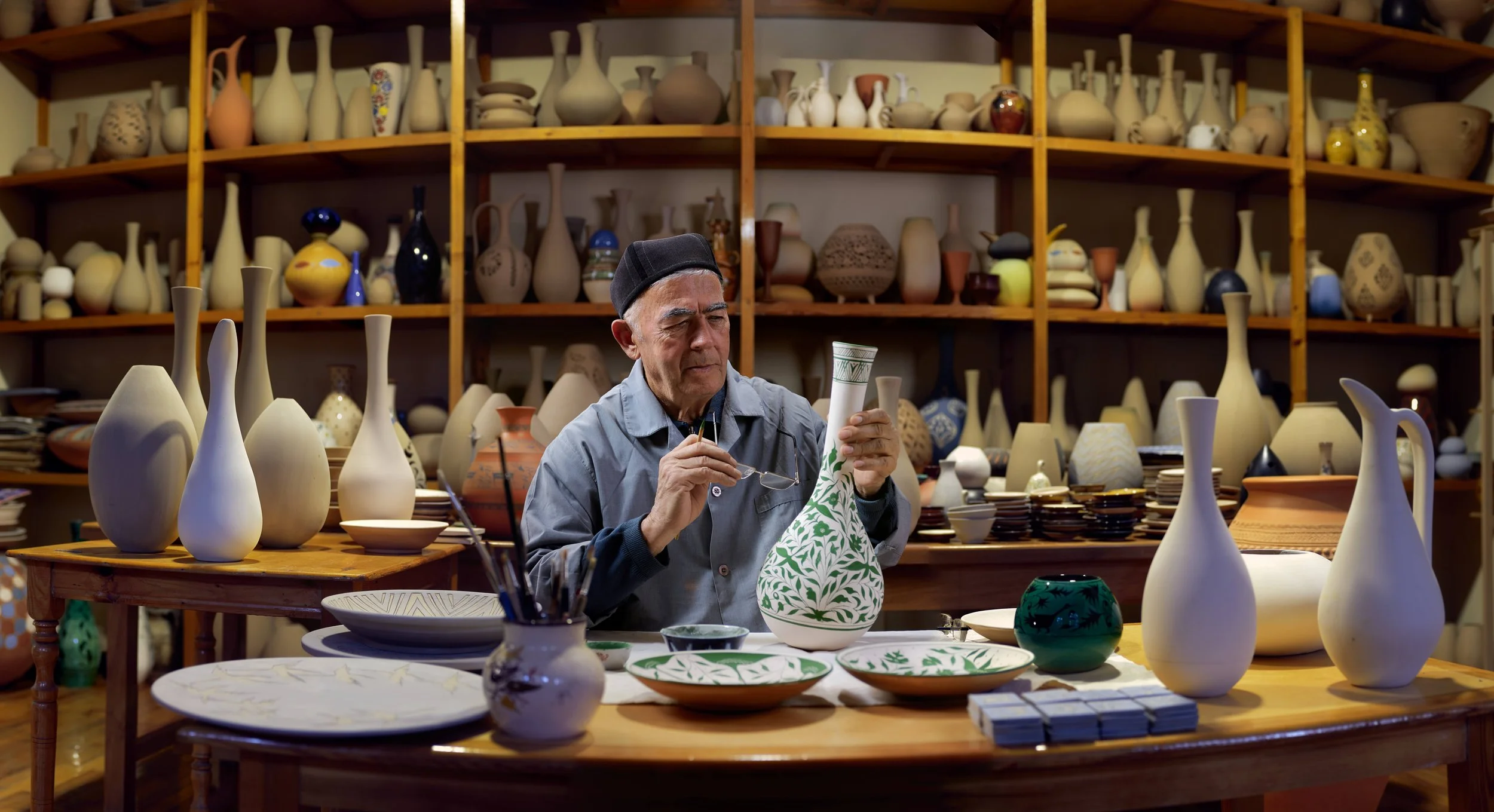
The Rakhimov workshop is an important part of national Uzbek craftsmanship. The workshop attracts scholars, artisans and ceramicists from other countries to learn and the gallery serves as an important attraction for locals and tourists to Uzbekistan.