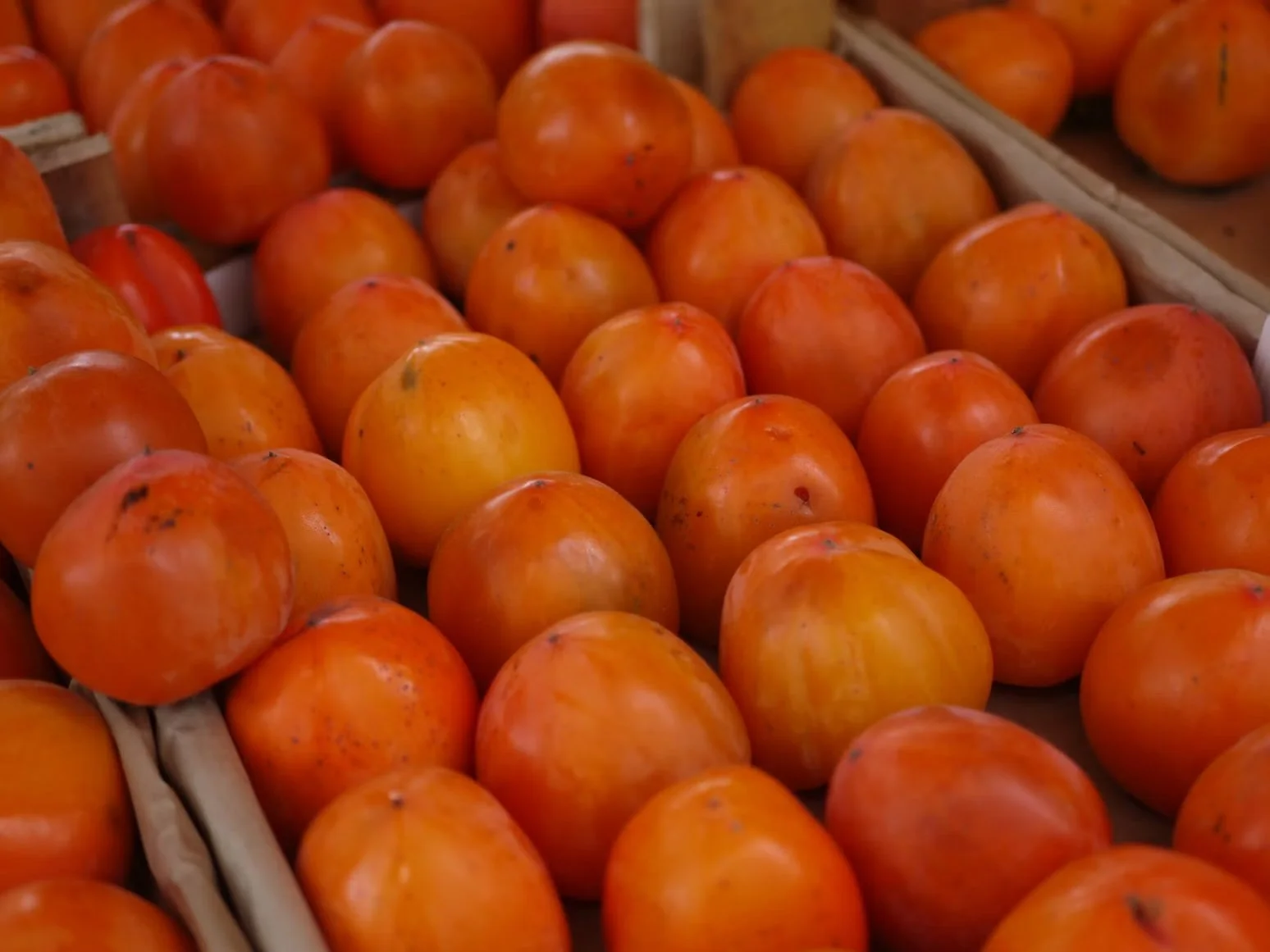
Although persimmons are not native to Uzbekistan—the golden-orange fruit was first cultivated in China over 2,000 years ago—they are a beloved treat in the country. Uzbekistan’s wealth of sunshine, as well as its long but distinct seasons, creates the perfect environment for persimmons to grow juicy and sweet, especially in the Namangan, Surkhandarya, and Fergana Valley regions. Harvest season generally runs from October into early December, making now an ideal time to look for fresh persimmons at bazaars and street-vendor stalls.
Uzbekistan exports tons of persimmons to surrounding nations, including Russia, Ukraine, and Kyrgyzstan. But quite a few of these honey-sweet fruits are consumed right here in the country—and sometimes, for particularly irresistible ones, before even leaving the market. In honor of the harvest season, we want to share our top three tips for selecting a delicious, ripe, can’t-wait-until-you-get-home persimmon.
Tip 1: Know Your Varieties
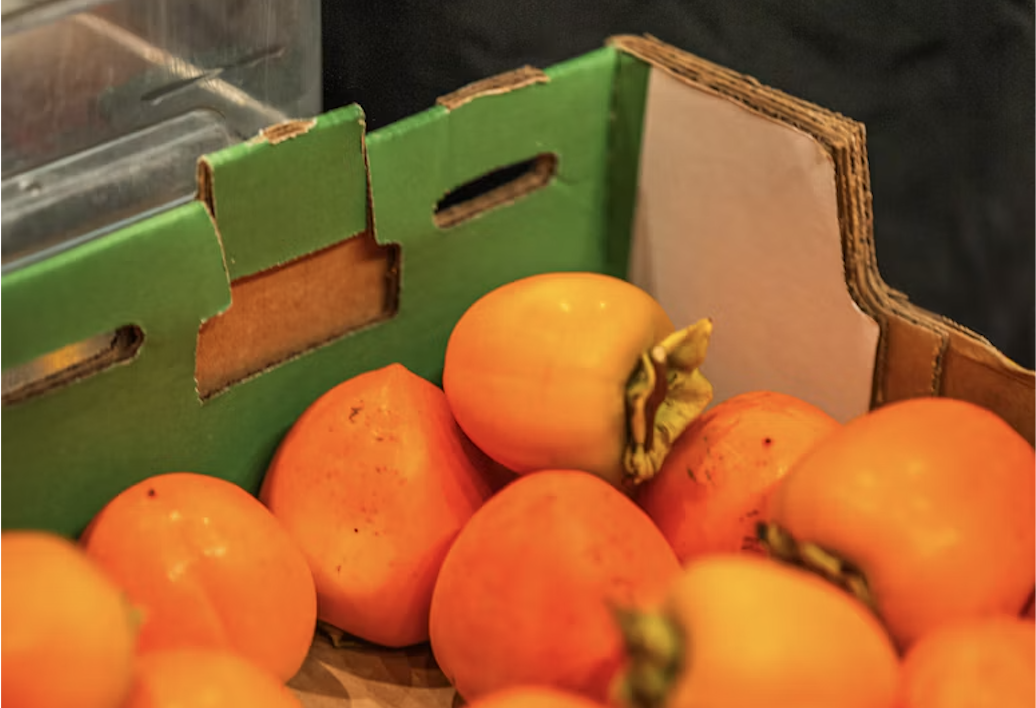
While there are nearly 2,000 cultivars of persimmon on earth, for shopping purposes it is only necessary to know two main categories. The first is astringent (or hachiya) persimmons, which are elongated and have a vaguely acorn-like shape. When ripe, astringent persimmons are soft to the point of fragility, but deliciously sweet to eat. You do not, however, want to eat an unripe astringent persimmon—they are high in tannins, and when unripe, will feel extremely dry and chalky in your mouth.
Non-astringent (fuyu) persimmons, on the other hand, can be eaten when firm or unfirm. An unripe persimmon of this variety will taste crisp, but not dry, and still pleasantly sweet. When ripe, non-astringent persimmons taste akin to a papaya. You can tell these fruits from astringent ones because they are rounder and chubbier, resembling an heirloom tomato.
Many fruit-lovers agree that astringent persimmons are an overall more spectacular fruit, featuring an intensely sweet flavor that can be all too welcome in the waning days of autumn. But if you’re facing down both varieties and neither is ripe, those stouter, non-astringent persimmons are the better bet.
Tip 2: Look at the Color
No matter which type you’re opting for, look for persimmons that have rich, vibrant, sunset-like colors. Orange is the key—a persimmon that is fully red is likely approaching over-ripeness (although an astringent persimmon that is orange turning red is perfect). A yellow persimmon is edible if it is non-astringent, but is not yet in its most delicious form.
Any persimmon with green patches is certainly not ready for eating, and, of course, persimmons with holes or that show signs of mold should be avoided. Small imperfections are a natural part of the growing process, but overwhelming surface oddities could be a sign of a poor persimmon.
Tip 3: Feel for a Soft Texture
Although not every fruit vendor will appreciate you touching all of their wares, texture might be the best indicator of a good persimmon.
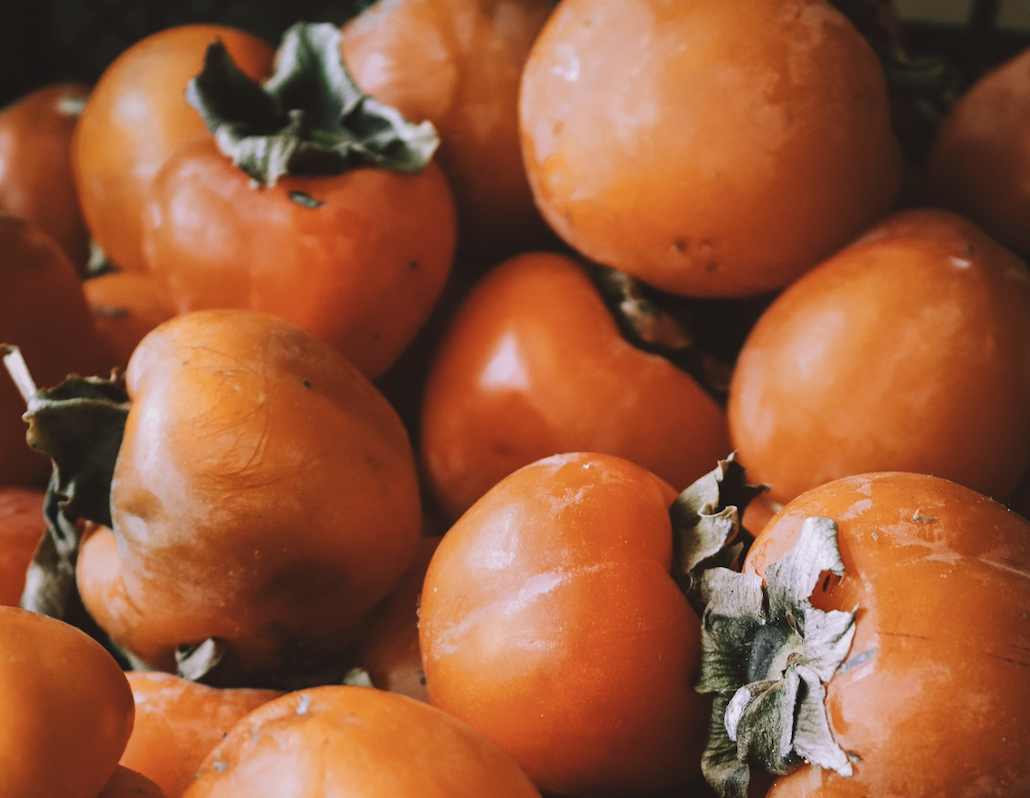
For astringent persimmons, those longer ones, the squishier the better. If you are new to persimmons but familiar with other fruits, think of the softness of a plum. A persimmon of this external texture, when sliced open, will reveal a custardy flesh that is scrumptiously sweet.
For non-astringent persimmons, steer clear of fruits this soft. These persimmons should have a bit of give when squeezed, but more like the springiness of a ripe pear. Imagine cutting into the persimmon: would it slice nicely, or fall apart? You want to choose a non-astringent persimmon that would maintain slices. That is why these varieties are the best choice for cooking or baking.
Once you’ve made your selection? All that’s left to do is enjoy.