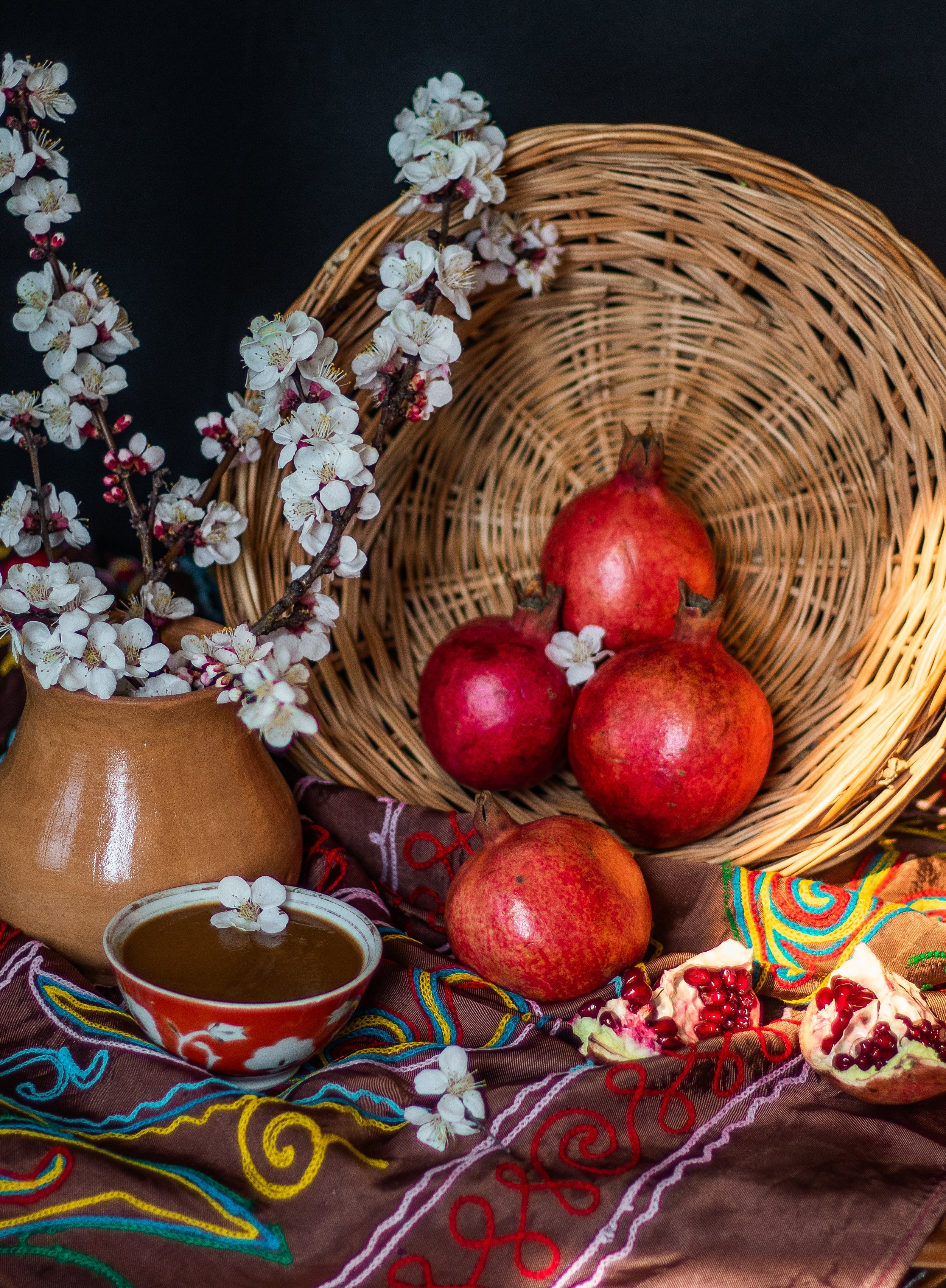
Pomegranates boast seeds reminiscent of gems, justifying their status as the king of fruits in the East. Much has been said about their taste, usefulness in healing, and sacred symbolism.
Pomegranates in History…
The significance of pomegranates in Central Asian culture extends at least two thousand years back in time. This is evidenced by archeological findings in the fourth-century Khorezm castle of Toprak-Kala, the walls of which feature paintings of the fertility goddess Anahita with pomegranates in her hand.
The fruit is also found in the famous early 16th-century historical work “Babur-nama” (“Babur’s Notes”) by the great Uzbek poet and historian Zahiriddin Muhammad Babur. He wrote, “Another city is Margilan, the west of Andijan. It is a good city, which is full of all grace. Pomegranates and apricots are plentiful and delicious there. There is one kind of pomegranate called donakalan; in its sweetness you can feel a light pleasant [sour taste] of apricot.”
Alongside true stories, the pomegranate has also found a place in legends. One of them tells that before each conquest, Amir Temur ordered servants to fill his stone bowl with pomegranate juice. Today, that stone bowl is located in the Samarkand mausoleum of Gur-Emir—the family tomb of the Temurid dynasty, though the story of pomegranate juice is not proven. Amir Timur’s warriors are said to have taken a sip of the scarlet fruit drink while swearing an oath to the commander.

In Medicine…
Pomegranate juice was a favored medicinal drink of Egyptian pharaohs, the ancient Romans, and the Assyrians, all of whom believed in its healing features. It is perhaps of no coincidence, then, that this fruit was also the favorite of the outstanding healer, philosopher, and scientist Abu Ali ibn Sina (Avicenna). Even 1,000 years ago, the grain, fruit peel, flowers and leaves of the pomegranate were widely used in folk medicine in the Muslim world. Today, that tradition carries into modern cosmetology.
Avicenna, who is widely considered one of history’s greatest medical scholars, wrote that pomegranates are characterized by anti-inflammatory, anti-fever, diuretic, and astringent properties. Not to mention, their juice is able to quench thirst, restore the body when exhausted, and strengthen immunity. Today, pomegranates are still considered a powerful natural antioxidant.
In Cooking…
Pomegranates are an indispensable ingredient in the Uzbek national cuisine. Delicious and juicy ruby arils give a delightful sour-sweet taste for hot dishes and serve as a magnificent decoration of salads, snacks, and desserts. Not to mention, they taste wonderful in Uzbek pilaf. Sauce, marinades, soft drinks and sherbets are made of the beloved pomegranate’s juice.
In Art…
The pomegranate fruit and its flower is a pervasive ornamentations in the art of many cultures. This is confirmed by images on Egyptian pyramids, magnificent ancient Byzantine fabrics, patterns of ancient Greeks and Arabs— all masterpieces of world art that include pomegranate motifs.
Pomegranate is also used in some traditional textile practices: the fruit skin was employed for dying fabrics and threads for embroidery and tanning light leather. Black paint can be prepared from the plant’s dried leaves. Beautiful pomegrante tree wood can be processed and polished to make a variety of small crafts and accessories.
In Uzbekistan…
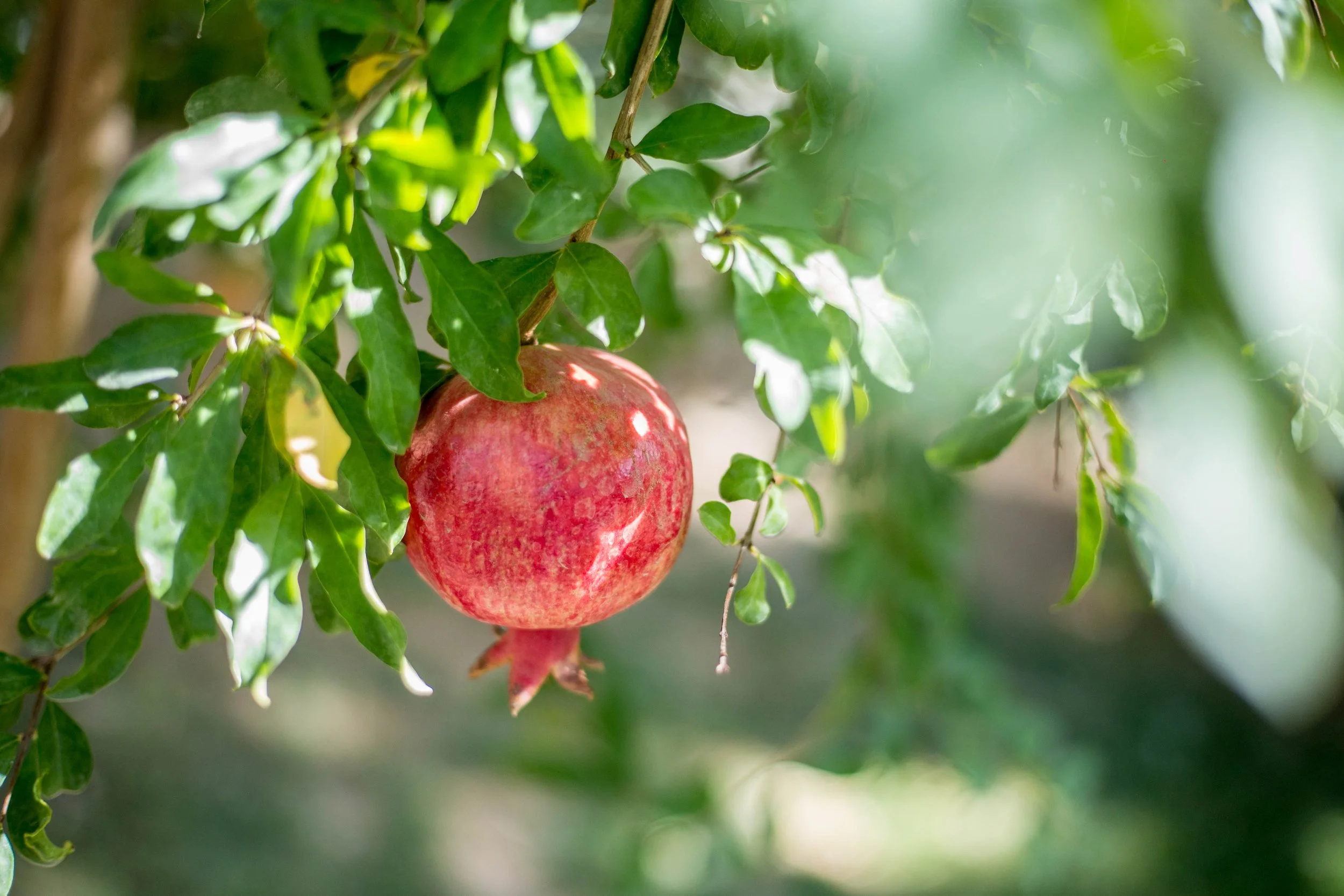
There are more than 350 varieties of pomegranate, but the typical one found in Uzbekistan has a maximum diameter of up to 18 cm and contains up to 700 seeds covered with a juicy shell. The heavenly fruit is harvested in the middle of autumn. One tree can give up to 50–60 kilograms of harvest.