Uzbekistan in Space
Photos by Uzcosmos
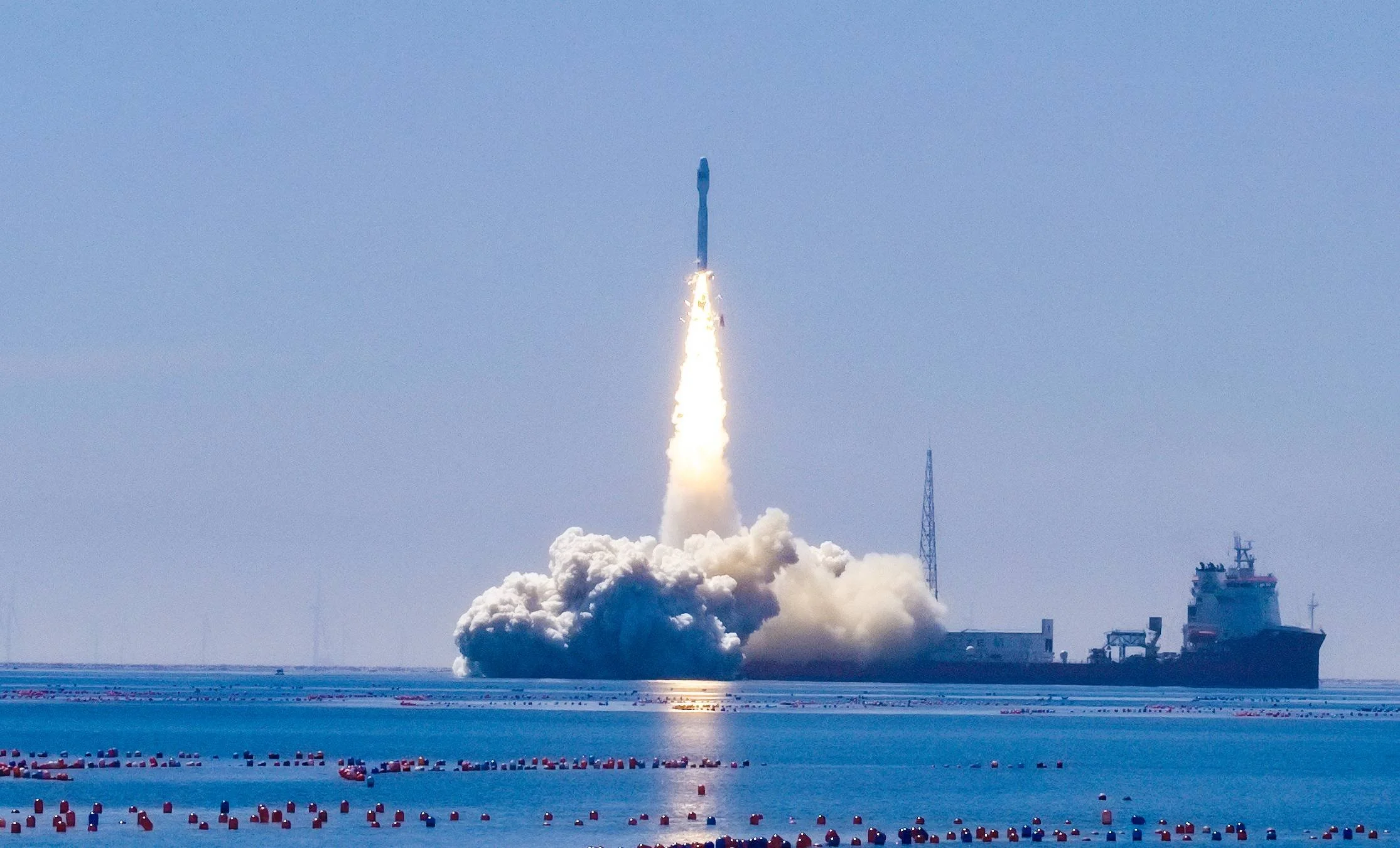
On August 5, the Samarkand-2028 hyperspectral Earth observation satellite was successfully launched into orbit from an offshore platform off the coast of Shandong Province, China. The mission marks a significant milestone for Uzbekistan's growing space industry, not because it launched its first satellite, but because Uzbek-developed technology became part of an international space mission for the first time.
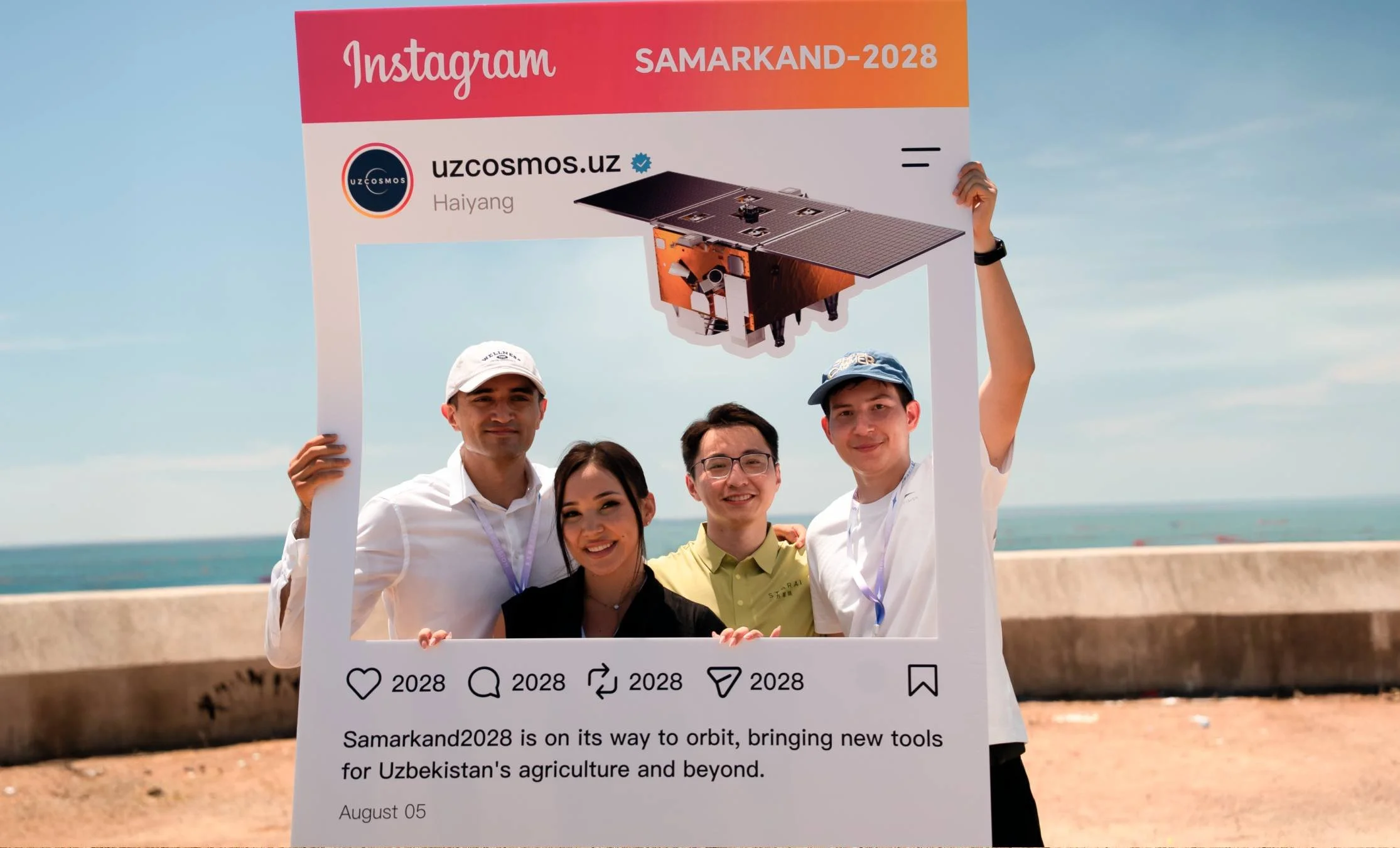
The launch was attended by a delegation from Uzcosmos, Uzbekistan's Space Research and Technology Agency, highlighting the country's expanding role in global space cooperation.
A Historic First for Uzbekistan
While Samarkand-2028 is not a national Uzbek satellite, it represents an important technological achievement for the country. The satellite was developed by the Chinese company STAR.VISION as a hyperspectral Earth observation mission in cooperation with Uzcosmos.
For the first time in the history of STAR.VISION's international projects, an artificial intelligence module designed by Uzcosmos engineers was integrated into the satellite's onboard system.
This marks Uzbekistan's transition from being solely a user of satellite data to becoming a contributor of advanced space technologies for international missions.
Photos by Uzcosmos
AI Processing in Orbit
The AI module is far more than standard software. It processes satellite images and Earth observation data directly onboard the satellite before transmission to Earth.
By analyzing and filtering data in orbit, the system reduces the volume of information that needs to be transmitted while delivering more relevant data faster. This significantly improves the efficiency of satellite operations and supports quicker decision-making across a range of industries.
Supporting Key Sectors
The Samarkand-2028 mission will provide valuable data for:
Agriculture
Environmental monitoring
Water resource management
Natural resource monitoring
Disaster prevention and emergency response
Urban planning
Other strategic sectors
The satellite's hyperspectral imaging capabilities will enable more detailed analysis of Earth's surface than conventional imaging systems.
Why "Samarkand-2028"?
The satellite's name carries special significance.
In 2025, during the International Astronautical Congress (IAC) in Sydney, Samarkand was selected to host the 79th International Astronautical Congress in 2028. It will be the first time the world's largest space congress is held in both Uzbekistan and Central Asia.
The satellite was named Samarkand-2028 to commemorate this landmark achievement and to highlight Uzbekistan's growing presence within the global space community.

Photos by Uzcosmos
Building the Future of Uzbekistan's Space Industry
The Samarkand-2028 mission represents an important step in the development of Uzbekistan's national space capabilities. By contributing an advanced AI solution to an international satellite mission, Uzbek engineers have demonstrated their expertise on the global stage.
The experience gained through this project will also support the development of Uzbekistan's future national satellite programs, including the Mirzo Ulugbek scientific satellite currently being developed by Uzbek specialists.
As Uzbekistan continues investing in innovation, research, and international partnerships, Samarkand-2028 stands as a symbol of the country's growing contribution to the future of space technology.