Legacy of Tezhip
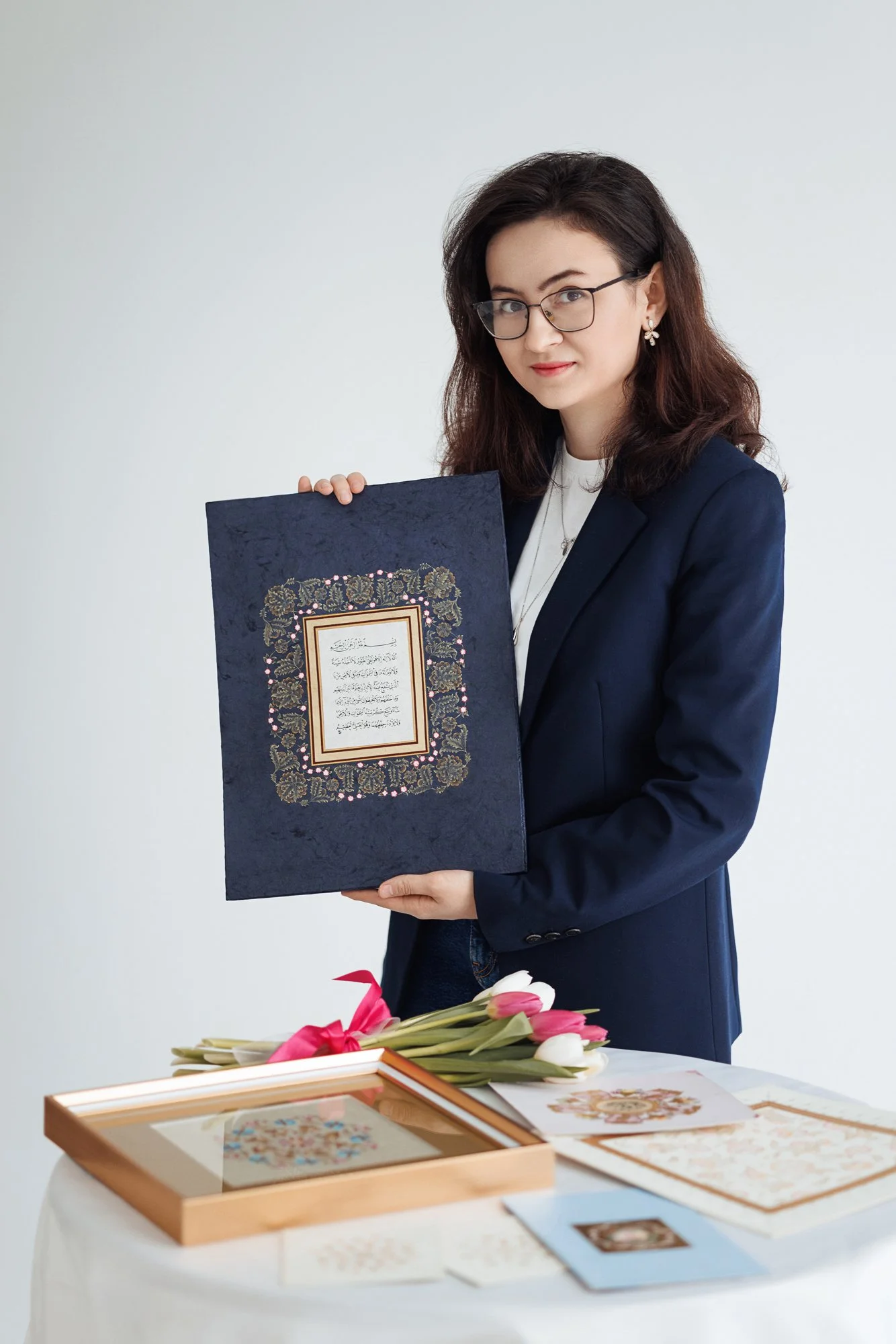
Discover the world of Tezhip with Nodira Alakbarova, master of this intricate art form and founder of Tezhip.uz School. Nodira's journey began during her doctoral studies in Medical Biochemistry in Turkiye, where she uncovered surprising parallels between the beauty of human body molecules and Tezhip's ornate patterns. Raised in Tashkent, Uzbekistan, with limited access to Tezhip education, Nodira was drawn to Istanbul's rich Islamic artistic heritage. Enrolling in a Tezhip school, she embarked on a mission to revive this forgotten art in Uzbekistan and Central Asia. Nodira's passion led her to establish an online/offline school, opening doors to Tezhip knowledge globally.
Text by Sevara Mashrabzoda
Photos by Mila Aleksandrova
What defines Islamic art in the context of Central Asia, and what is its historical and cultural significance?
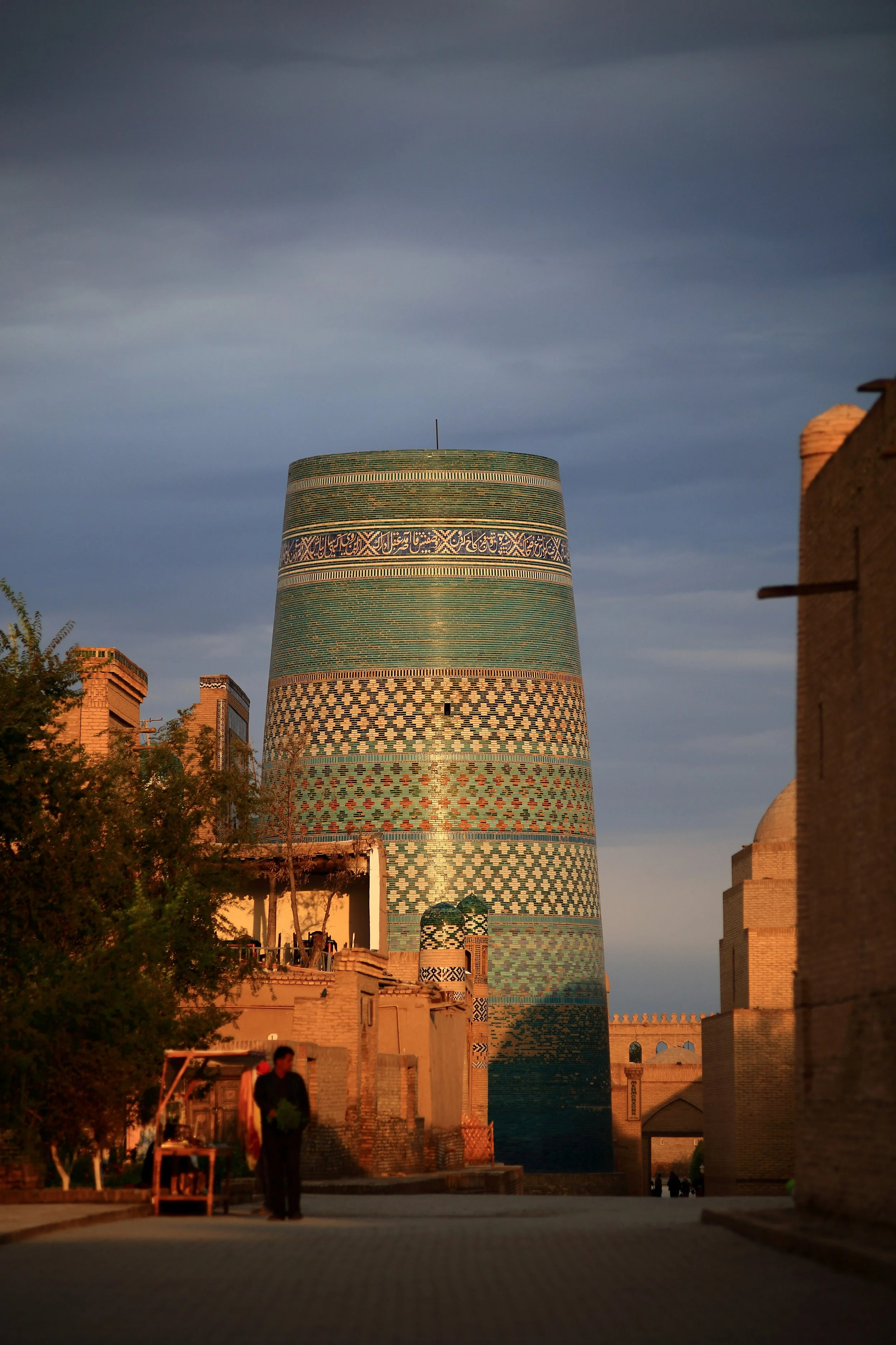
- Islamic art emerged as a means of enlightening and spreading Islam in the Middle Ages, becoming a powerful tool for cultural exchange. The synthesis of different cultural influences in Islamic art reflects the contributions of various peoples, especially those of Central Asia. The stylization characteristic of this art is in keeping with Islamic beliefs that forbid the depiction of humans and animals. The Abbasid, Timurid and Ottoman empires played an important role in its development, where excellent examples of Islamic culture can be found.
As we understand, Tezhip art distinguishes itself from other art forms through its enigmatic symbols and unique philosophy. What insights can you share about the drawing techniques, patterns and color palettes utilized in Tezhip?
- Islamic art encapsulates a profound philosophy that embodies the pursuit of ideal and spiritual perfection. Central to this art form is the prohibition of depicting animals and humans, a principle rooted in the desire to avoid idolatry and accentuate the sublime values of the religion. A fundamental aspect of Tezhip art is its intricate relationship with mathematics. Its patterns are meticulously constructed on the foundation of strict geometric shapes and calculations. Every line, angle, and element is measured with precision, resulting in a perfect harmony that not only pleases the eye but also nourishes the soul.
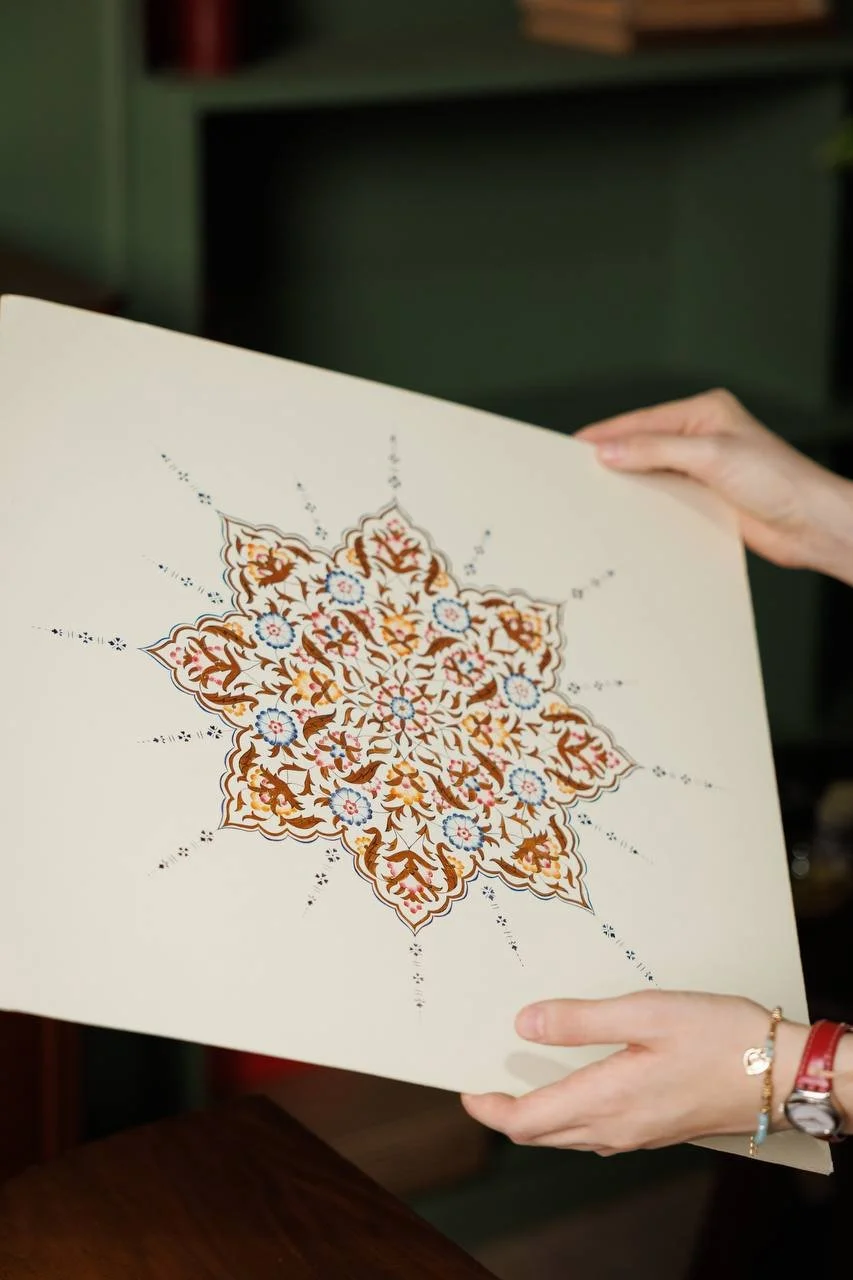
In the realm of Islamic decorative arts, the color blue assumes a significant role. It harmoniously intertwines with gleaming gold, with genuine 18 to 24 karat gold plating employed to accentuate the gold's brilliance to the fullest. The blue backdrop accentuates the luminosity of the gold, imparting a unique depth to the artwork. This effect is masterfully achieved through the use of lapis lazuli, revered for its ability to produce a perfect hue, hence its preference over synthetic alternatives. Within Islamic art, blue serves as a symbol of infinity and eternity, infusing works with grace and elegance.
What role did Turkic nations play in the development of Tezhip art, particularly during the Timurids period?
- Turkic nations have played a pivotal role in the development of Islamic Art especially Tezhip, contributing a rich array of motifs that have adorned architectural wonders from the Middle East to Western Africa. Turkic decorative art is characterized by a plethora of motifs, including stylized leaves, flowers, buds, as well as bulut, chintemani, müncheni, and animal motifs.
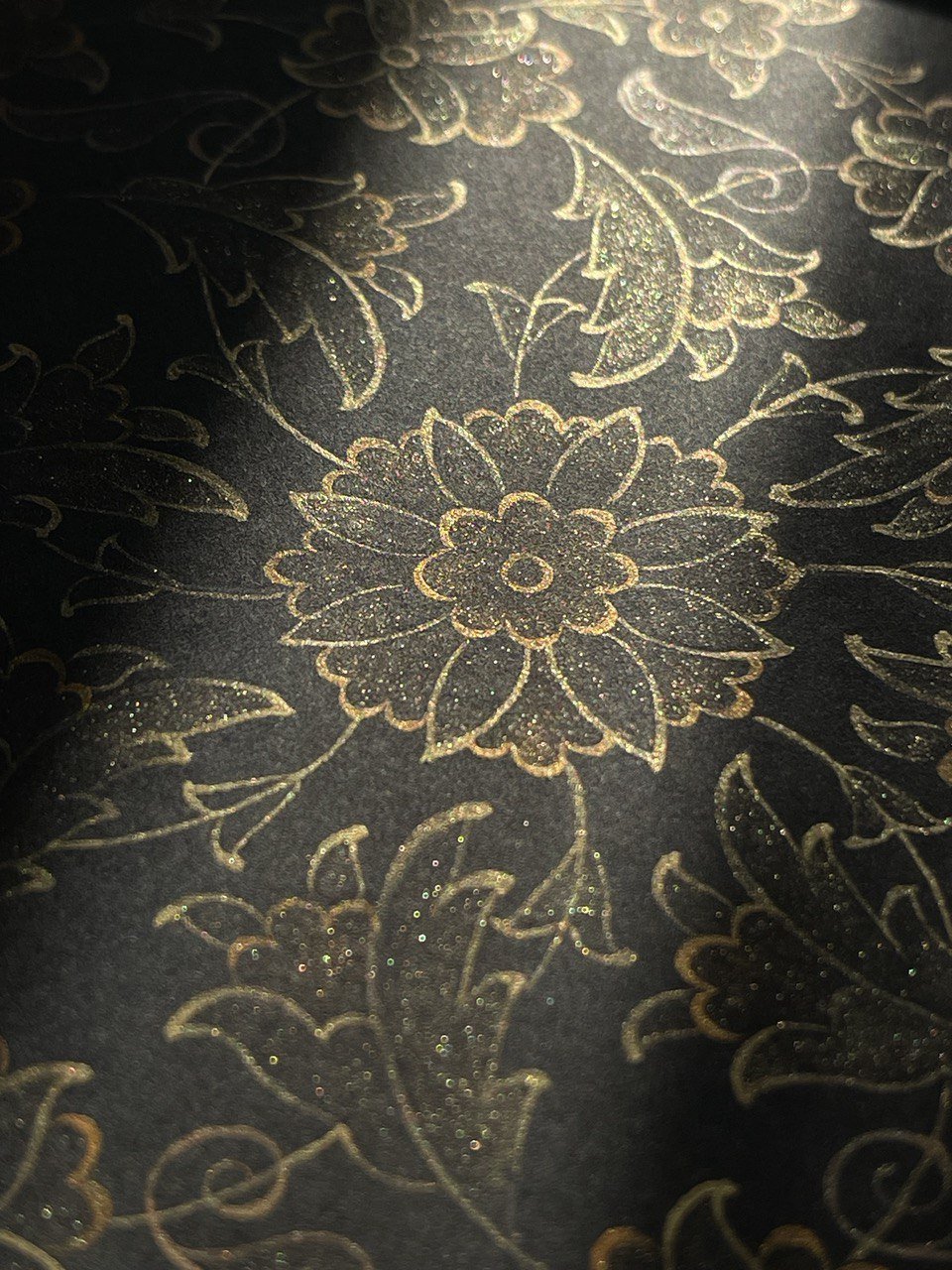
Among these, the Rumi motif stands out, originally hailing from China and further refined by the Karakhanids and Seljuks. The Khatai motif, also known as the Islimi motif, renowned for its intricate plant patterns. This motif holds a special association with the Uyghurs, particularly those from Eastern Asia. The city of Herat emerged as a cultural hub during the Timurid period, fostering the active development of Khatai motifs. Under the patronage of Timur and his heirs, notably Baysungur-mirza, the Timurid dynasty saw a flourishing of art and science. After Timur's passing, his successors continued to nurture the artistic legacy, propelling the development of Islamic art to new heights.
Could you give us a glimpse into Tezhip School's current activities and your vision for its future?
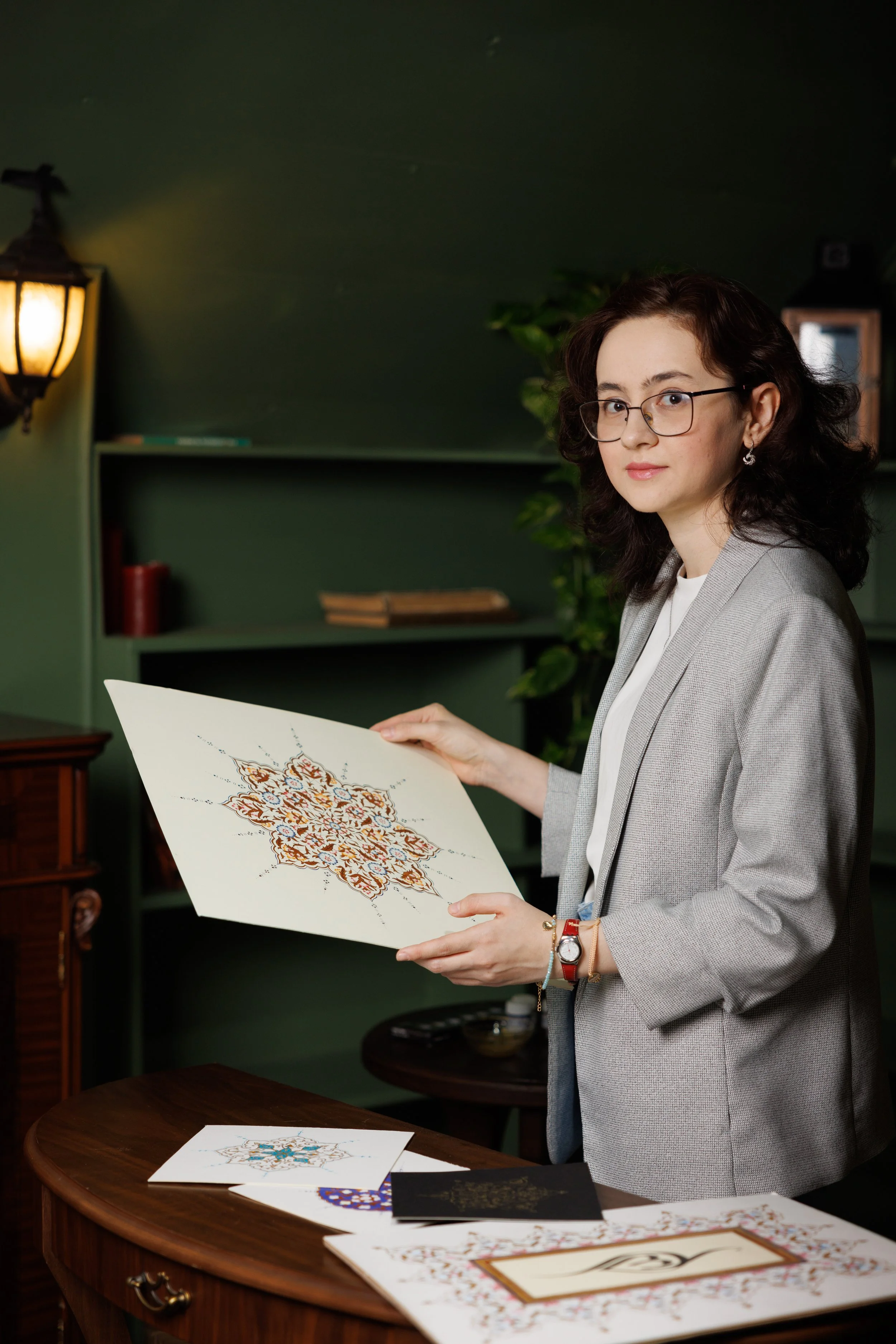
- Aside from our Tezhip courses, we host monthly lectures covering various aspects of Islamic arts, including architecture, painting, calligraphy, and more. These sessions explore the historical significance and cultural impact of Islamic art, often focusing on influential figures. We also offer master classes for those seeking a hands-on experience with Tezhip, as well as thematic workshops honoring pioneers in the field. Moving forward, our goals include expanding awareness of Turkic-Decorative-Islamic Art and enhancing art literacy among the wider population, fostering appreciation for global artistic heritage.